
Author: Site Editor Publish Time: 2026-08-05 Origin: Site
Premium portable drinkware has exposed a massive accessory gap. Rigid, mismatched, or poorly designed straws actively compromise the leak-proof integrity of high-end cups. Consumers and procurement teams face a fragmented market of reusable options. Selecting the wrong material leads to lid incompatibility, mold retention, structural degradation, and poor performance during daily commutes or backpacking trips. Evaluating a Silicone Straw requires moving beyond basic aesthetics. You must assess material grade, durometer hardness, dimensional compatibility with lid apertures, and maintenance workflows. A mismatched straw turns a spill-proof tumbler into a leaking liability. This guide breaks down the structural designs that legitimately support portable drinkware systems.
Material Trumps Marketing: True portability requires 100% food-grade or medical-grade silicone to prevent chemical leaching and odor retention during temperature fluctuations.
Design Dictates Compatibility: Pure silicone offers maximum flexibility for folding into travel cases, briefcases, or backpacks, while hybrid designs (stainless steel with silicone toppers) provide superior structural integrity for piercing ice.
Hygiene is the Primary Risk: The porous nature of lower-grade silicone demands specific cleaning protocols; transparent, semi-translucent, or color-coded multi-pack designs are critical for verifying internal cleanliness and preventing cross-contamination during family travel.
Application-Specific Sizing: Standard 6mm diameters suit water and espresso/coffee, but 9mm+ diameters are mandatory for high-viscosity liquids (smoothies, yogurt, milk tea) to prevent structural collapse under suction.
A successful straw in a portable context must meet strict functional criteria. We evaluate performance based on four primary metrics: leak prevention, temperature resistance, bite safety, and transportability. Leak prevention ranks highest for commuters. The straw must integrate seamlessly with the drinkware lid to prevent liquid escape during movement. Temperature resistance dictates material stability. Users frequently transition between iced beverages and hot coffee, demanding a material capable of handling rapid thermal shifts without degrading or releasing volatile organic compounds. Bite safety protects the user during unexpected turbulence on a flight or sudden stops in a vehicle. Finally, transportability dictates how easily you can pack, clean, and deploy the accessory across diverse environments like cars, flights, or backcountry trails.
Common failure points of inferior accessories include:
Gasket Deformation: Rigid tubes stretch rubber lid valves beyond their elastic limit, causing permanent leaks.
Thermal Shock Transfer: Conductive metals transfer extreme heat directly to the user's palate.
Palate Strikes: Hard plastics and glass present impact hazards during active transit.
Micro-cracking: Acrylics degrade under UV exposure and repeated biting, harboring bacteria.
Modern tumblers rely on rubberized lid gaskets and splash guards to maintain a watertight seal. Rigid materials like steel or glass often warp these delicate gaskets over time. They force the aperture open, creating permanent micro-gaps where liquid escapes. Elastomers interact differently. The inherent flexibility of the material allows it to compress slightly against the lid mechanism. This compression forms a custom, spill-resistant seal without permanently stretching the splash guard. When you remove the tube, the lid gasket returns to its original shape. This dynamic interaction preserves the lifespan of expensive insulated drinkware. Engineers specifically design high-end tumbler lids to accommodate the slight compression of soft tubes, ensuring a friction fit that prevents the straw from sliding out during transport.
Insulated drinkware excels at maintaining extreme temperatures for hours. This creates a secondary hazard for the user. Conductive materials transfer heat or cold directly to the lips and teeth. Drinking hot espresso through a metal tube often results in immediate burns. Conversely, iced beverages cause uncomfortable chilling on sensitive enamel. The material acts as a highly effective thermal insulator. It blocks temperature transfer entirely. You can safely consume liquids near boiling or freezing without experiencing thermal shock. This insulating property makes it the only viable option for users who alternate between hot and cold drinks in the same travel mug. The low thermal conductivity coefficient ensures the exterior of the tube remains at room temperature regardless of the internal fluid temperature.
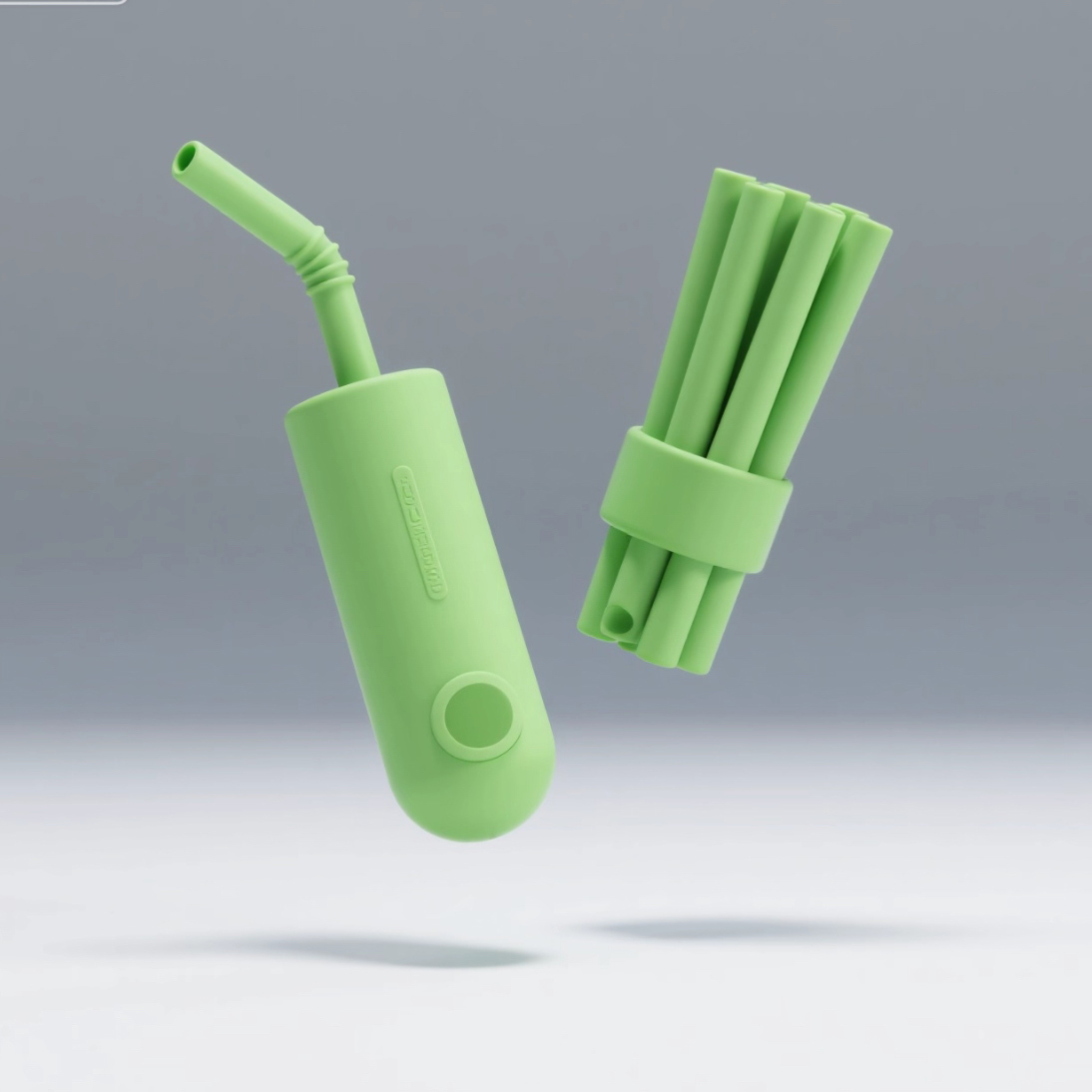
A pure silicone straw offers maximum flexibility. These classic designs bend effortlessly, making them ideal for active transit. They feature excellent bite-valve potential, allowing users to control liquid flow by simply biting down. This seamless integration works perfectly with portable coffee makers and soft-flask hydration systems. However, pure elastomers lack rigidity. They struggle to stir densely packed ice or pierce plastic seals on pre-packaged cups.
Hybrid models solve this structural deficit. They combine a rigid metal shaft with a soft topper. The 304 stainless steel body provides the necessary torque to crush ice and stir thick powders. The soft tip ensures dental protection and thermal insulation. This architecture dominates the daily commuter market, offering the durability of steel alongside the safety profile of soft elastomers. You get the mechanical leverage required for heavy ice loads without sacrificing palate safety.
Engineers design foldable mechanisms specifically for pocket-carry and travel bags. Segmented folding straws break down into three or four connected pieces, much like a tent pole. An internal medical-grade tension cord holds the segments together. They fit neatly into hard-shell aluminum travel cases. These cases slide effortlessly into briefcases or backpacks. The trade-off involves cleaning complexity. The segmented joints create internal ridges where debris can accumulate. Continuous flexible tubes offer an alternative. You simply roll or fold the tube into a carrying tin. While they require slightly more effort to pack, continuous tubes lack internal seams, significantly reducing the risk of bacterial buildup.
Toddler and baby drinkware demands strict adherence to safety protocols. Standard adult designs pose severe risks to developing gums and airways. A baby feeding silicone straw incorporates specialized safety features to mitigate these hazards. Integrated stoppers sit below the lid line. These molded ridges prevent the child from pulling the tube out of the cup, eliminating a common choking hazard. Manufacturers utilize ultra-soft durometer ratings for these products. The softer material yields instantly under pressure, protecting delicate palates if the child falls while drinking. Lengths are also intentionally truncated to match smaller cups and prevent deep throat insertion.
The market for customizable drinkware accessories continues to expand. A creative silicone straw often features unique textures, custom molds, or ergonomic bends tailored to specific tumbler brands. These aesthetic choices directly impact functional portability. Textured grips prevent the tube from slipping out of wet hands during outdoor activities. Multi-color sets provide hygiene tracking for families traveling together, ensuring no cross-contamination occurs between siblings. A handmade silicone straw brings artisanal design to portable setups. Users must verify these custom pieces still meet strict food-grade certifications before use. Artisanal designs often incorporate thicker walls to support complex exterior shapes, which inadvertently improves their performance with high-viscosity liquids.
Not all elastomers perform equally in portable environments. Standard commercial grades often contain plastic fillers to reduce manufacturing costs. These fillers compromise temperature resistance and introduce chemical leaching risks. You must look for specific certifications. FDA-approved food-grade material represents the baseline for safety in the United States. LFGB certification, the European standard, requires even more stringent testing, including passing a comprehensive peroxide test, and indicates a higher purity level.
You can verify material purity using the pinch test:
Grasp a small section of the tube firmly between your thumb and index finger.
Pinch the material tightly and twist it 90 degrees.
Observe the stressed area for any color changes.
If the twisted section turns white, the manufacturer used cheap plastic fillers.
Pure food-grade or medical-grade material retains its solid color regardless of how much you stretch or twist it.
Products failing the pinch test will degrade rapidly when exposed to hot coffee or acidic juices.
Dimensions dictate fluid dynamics. A mismatch between diameter and liquid viscosity leads to structural collapse. When you apply suction to a thick beverage through a narrow tube, the internal pressure drops. Soft walls will cave in, blocking the flow entirely. Oversized diameters are mandatory for high-viscosity liquids. Heavy wall thickness prevents this collapse.
Sizing Matrix for Portable Drinkware Compatibility
Drinkware Type / Capacity | Recommended Length | Recommended Diameter | Ideal Beverage Profile |
|---|---|---|---|
Standard Coffee Mug (12-16oz) | 6 to 7 inches | 6mm (Standard) | Hot Coffee, Tea, Water |
Travel Tumbler (20-30oz) | 8.5 to 9.5 inches | 8mm (Medium) | Iced Coffee, Juice, Soda |
Large Insulated Flask (40oz+) | 10.5 to 12 inches | 6mm to 8mm | Water, Electrolyte Drinks |
Smoothie / Boba Cup (24oz) | 9 to 10 inches | 10mm to 12mm (Oversized) | Smoothies, Yogurt, Milk Tea |
Selecting the right design requires balancing rigidity against flexibility. We measure this using the Shore A durometer scale. Higher flexibility (Shore 40A) drastically increases portability. You can fold a highly flexible tube into a tiny carrying case, making it perfect for backpacking or minimalist travel. However, this flexibility sacrifices functional utility. A soft tube cannot pierce the sealed plastic film on a bubble tea cup. It also fails to break up frozen clumps in a thick smoothie. Conversely, increasing the durometer hardness (Shore 70A) improves stirring capability but makes the accessory bulky and difficult to pack in small compartments. You must align this trade-off with your primary travel habits. The industry standard for a balanced daily commuter tube sits right at Shore 50A.
To fully understand the value of elastomers in portable drinkware, we must evaluate them against legacy materials. Each material presents distinct advantages and critical failure points when deployed in active transit environments.
Material Performance Comparison in Portable Environments
Material Type | Impact Safety (Transit) | Thermal Insulation | Durability / Lifespan | Primary Failure Point |
|---|---|---|---|---|
Food-Grade Elastomer | Excellent (Yields on impact) | Excellent (Blocks heat transfer) | High (Tear-resistant) | Flavor retention if washed improperly |
304 Stainless Steel | Poor (Palate strike hazard) | Poor (Conducts heat instantly) | Maximum (Indestructible) | Lid gasket deformation over time |
Tritan / Acrylic Plastic | Moderate (Rigid but brittle) | Moderate | Low (Micro-cracking) | Shatters under heavy bite pressure |
Borosilicate Glass | Poor (Shatter hazard) | Moderate | Moderate | Catastrophic breakage when dropped |
Natural Bamboo | Moderate (Splinter hazard) | Good | Low (Degrades in water) | Rapid mold growth in porous grain |
Stainless steel dominates the durability conversation. It outlasts almost every other material and never retains flavors from previous drinks. However, steel presents significant safety risks during active transit. Walking, driving, or riding a boat while drinking from a steel tube introduces the risk of severe palate injury if you hit a sudden bump. Steel also features high thermal conductivity, making it unsuitable for hot liquids. High-grade elastomers mitigate these safety risks entirely. They bend upon impact, protecting your teeth and gums. While they require more careful maintenance to prevent flavor-ghosting, their safety profile in motion makes them superior for travel.
Hard plastics like Tritan or acrylic often ship as default accessories with new tumblers. They offer clarity and rigidity but fail under stress. Hard plastic lacks bite resistance. Users who chew their straws will quickly create micro-cracks in acrylic. These cracks harbor bacteria and eventually lead to shattering. Plastic also degrades over time when exposed to UV light or hot dishwasher cycles, becoming brittle. Elastomers offer exceptional tear-resistance. They withstand heavy biting without structural damage and ignore UV degradation, ensuring a much longer functional lifespan in outdoor environments.
Glass provides the purest tasting experience and excellent visual hygiene verification. However, glass introduces catastrophic shatter risks in portable environments. Dropping a travel bag containing a glass tube often results in dangerous shards. Bamboo appeals to eco-conscious consumers but carries high implementation risks. Wood is naturally porous. It absorbs moisture rapidly, creating a high-risk environment for mold growth if not dried perfectly. Bamboo also splinters over time. High-grade elastomers offer the sterilization capabilities of glass without the shatter risk, and completely avoid the porosity and splintering dangers associated with organic wood products.
The primary implementation risk of any reusable tube involves trapped moisture. While high-quality material itself is non-porous to bacteria, the internal environment of the tube is not. If you wash the accessory and immediately seal it inside a dark, enclosed travel case without proper drying, you create an ideal microclimate for surface mold. Moisture trapped inside leads directly to bacterial growth. Transparent or semi-translucent designs help mitigate this risk by allowing visual inspection of the interior walls. Opaque designs require strict adherence to drying protocols before storage. Always store tubes vertically in an open-air environment until completely dry.
The unique molecular structure of these elastomers absorbs strong volatile compounds. They easily trap essential oils from heavily fragranced dish soaps or lingering coffee oils. This results in flavor-ghosting, where your morning water tastes like yesterday's peppermint tea. You can mitigate this through specific thermal protocols.
Follow this baking protocol to neutralize trapped odors:
Wash the tubes thoroughly with unscented dish soap and hot water.
Rinse them completely and shake out all excess internal moisture.
Preheat your kitchen oven to 250°F (120°C).
Place the dry tubes directly on a clean, ungreased baking sheet.
Bake for exactly 20 minutes to force the absorbed oils to off-gas.
Remove from the oven and allow them to cool at room temperature.
Maintaining internal structural integrity requires the right tools. Traditional wire bristle brushes often cause micro-abrasions on the soft inner walls of the tube. These microscopic scratches become breeding grounds for bacteria over time. Silicone squeegees offer a safer alternative. These tools pull debris out of the tube using a smooth, flexible disc that perfectly matches the internal diameter. They clean the surface without scratching it. If you must use a bristle brush, ensure it features soft nylon bristles and a protective plastic tip on the wire core to prevent gouging the interior walls.
Measure the internal depth of your tumbler from the base to the lid aperture, then add exactly two inches to determine your minimum required straw length.
Inspect your daily beverage viscosity; upgrade to a 9mm or 10mm diameter if you consume smoothies or blended iced drinks more than twice a week.
Perform the pinch test on your current accessories by twisting the material tightly to check for white plastic fillers that compromise heat resistance.
Purchase a dedicated squeegee tool that matches your internal diameter to prevent micro-abrasions during daily cleaning.
A: Yes. You can easily cut pure elastomer designs using sharp kitchen shears. Always cut the bottom at a 45-degree angle. This angled cut ensures optimal liquid flow and prevents the tube from suctioning flat against the bottom of your mug. Never attempt to cut hybrid models containing stainless steel cores, as this will leave jagged metal edges.
A: High-quality, food-grade elastomers are entirely safe for hot beverages. They typically withstand temperatures up to 400°F (204°C) without melting, warping, or leaching chemicals into your drink. The material acts as a highly effective thermal insulator, protecting your lips and teeth from the extreme heat of freshly brewed espresso or tea during your commute.
A: These materials absorb essential oils from fragranced dish soaps over time. To remove the trapped taste, boil the affected items in a pot of water mixed with a half-cup of white vinegar for ten minutes. Alternatively, bake them completely dry on a standard cookie sheet at 250°F (120°C) for 20 minutes to force the odors to off-gas.
A: Baby-specific designs feature integrated pull-stopping ridges molded directly into the tube. These ridges lock securely under the cup lid, preventing the child from yanking the tube out. They also utilize a significantly softer durometer material to protect developing gums and feature shorter overall lengths to eliminate deep-insertion choking hazards during use.
A: The material itself does not grow mold, but improper storage accelerates surface bacterial growth. Because the tubes are flexible, users frequently fold wet items into dark, enclosed travel cases. This trapped moisture creates a perfect microclimate for mold. Rigid steel typically air-dries upright in a kitchen rack, avoiding this specific moisture trap entirely.
A: Yes, food-grade options are fully dishwasher safe. Place them securely in the cutlery basket to prevent movement. Avoid placing them directly against exposed heating elements at the bottom of older dishwashers. Skip heavily fragranced detergent pods, as the porous surface structure will absorb the artificial lemon or pine scents during the wash cycle.


