
Author: Site Editor Publish Time: 2026-08-02 Origin: Site
Extreme thermal environments destroy seals. When a seal loses its rebound, equipment fails. This causes severe safety hazards, massive energy loss, and unplanned downtime on the production floor. Prolonged exposure to high temperatures accelerates polymer chain relaxation. Standard elastomers deform permanently under continuous stress and heat. Even poorly designed silicone seals suffer from this inevitable compression set. Preventing compression loss requires more than just selecting a better material off a spec sheet. You must adopt a holistic design approach. This approach encompasses chemical formulation, structural geometry, and precise compression ratio calculations. A highly engineered High Temperature Silicone Gasket relies on specific curing agents, specialized fillers, and exact groove dimensions. These elements work together to maintain elastic memory under extreme operational loads, ensuring your flanges stay dry and your pressure vessels hold tight.
Material Chemistry Dictates Baseline Performance: Selecting the right cure system (e.g., peroxide or platinum) and specialized fillers is the first defense against thermal degradation and chemical attack.
Geometry is as Critical as Material: Proper groove design and accounting for thermal expansion are required to prevent over-compression, which accelerates permanent deformation.
Calculated Compression Ratios Prevent Failure: Designing for an exact compression percentage ensures the gasket maintains uniform pressure without exceeding its elastic limits post-installation.
Application Context Drives Customization: Solutions vary drastically between an oven silicone sealing ring and an aviation high temperature silicone sheet, requiring tailored evaluation criteria including NVH (noise, vibration, and harshness) reduction.
Compression set measures the permanent deformation of a material after a compressive force is removed. High temperatures aggressively accelerate this physical process. When you compress a rubber seal between two heavy steel flanges, the polymer chains stretch and realign to accommodate the mechanical load. Heat introduces massive amounts of thermal energy into this closed system. This energy increases molecular kinetic activity, which physically breaks the chemical cross-links holding the polymer matrix together.
While the material remains trapped in its compressed state, new cross-links form. The polymer essentially cures again in this flattened shape. Once the mechanical load is removed during maintenance or due to flange deflection, the material forgets its original extruded shape. It cannot rebound to fill the gap. The seal remains permanently flattened. This creates a direct path for fluid or gas leaks. Understanding this mechanism is the first step in engineering a seal that survives continuous thermal cycling.
A successful design must maintain a low compression set percentage over its intended lifecycle. Engineers typically test this using the ASTM D395 standard. This rigorous test subjects the material to constant deflection at elevated temperatures for a specified duration, usually 22 or 70 hours. A high-performance seal will yield a compression set below 15% under these harsh conditions. You must compare silicone against other common elastomers to understand its necessity.
Elastomer Thermal Performance Comparison
Elastomer Type | Max Continuous Temperature | Compression Set Resistance at High Heat | Primary Failure Mode in Extreme Heat |
|---|---|---|---|
EPDM | 150°C (300°F) | Poor above 150°C | Hardening, cracking, rapid compression set |
Nitrile (Buna-N) | 120°C (250°F) | Very Poor | Extreme embrittlement, melting |
Standard Silicone | 200°C (392°F) | Moderate | Gradual loss of rebound, tearing |
High-Temp Silicone (Peroxide Cured) | 230°C+ (446°F+) | Excellent | Slow polymer relaxation over extended years |
You must define operational variables before any design work begins. Identify the continuous operating temperature of the machinery. Document peak temperature spikes during startup or shutdown sequences. Note any chemical exposure, including aggressive cleaning agents, industrial solvents, or petroleum byproducts. Calculate the mechanical load applied by the mating flanges. These variables dictate the base polymer selection and the physical geometry of the final seal.
The curing process cross-links the raw silicone polymer into a stable, usable elastomer. The choice of curing agent drastically affects high-temperature performance and compression set resistance. Peroxide-cured silicones generally offer superior resistance to compression set at extreme temperatures. The peroxide reaction creates highly stable carbon-carbon cross-links between the polymer chains. These specific bonds resist thermal cleavage exceptionally well. They require a post-bake process to remove volatile byproducts, which further stabilizes the polymer matrix for industrial use.
Platinum curing offers different advantages. It provides higher purity, faster cure times, and leaves no volatile byproducts behind. This makes it ideal for medical or cleanroom applications. However, standard platinum-cured silicones often underperform in high-heat, high-compression environments compared to their peroxide counterparts. The cross-links formed by platinum addition curing are more susceptible to breaking under continuous thermal stress. You must specify high-consistency rubber (HCR) with optimized peroxide systems for maximum thermal rebound in heavy industrial applications.
Raw silicone gum lacks the mechanical strength required for industrial applications. It would tear immediately under flange pressure. Manufacturers blend specific fillers into the gum to enhance thermal stability and physical strength. Fumed silica is the most common reinforcing filler. It drastically increases tensile strength and tear resistance without compromising flexibility.
To combat extreme heat, chemists introduce specific additives. Red iron oxide acts as a powerful heat stabilizer. It intercepts free radicals generated during thermal degradation, preventing them from attacking and breaking the siloxane polymer backbone. Extreme heat also accelerates chemical degradation. You must specify high-performance material families that offer dual flexibility and chemical resistance. Specific additives prevent the material from becoming brittle or overly soft when subjected to continuous thermal cycling. We rely on these engineered blends to maximize equipment longevity under harsh conditions.
You must evaluate solid silicone against closed-cell silicone sponge based on your flange design. Solid silicone requires high compressive forces to create a seal. It handles high internal pressures well and resists physical abrasion. However, if your flanges are made of thin sheet metal, the force required to compress solid silicone will bend and distort the metal, causing leaks between the bolt holes.
Closed-cell silicone sponge utilizes microscopic pockets filled with nitrogen gas. These gas-filled cells prevent the passage of air, water, or chemicals. They maintain a reliable seal even at much lower compression forces. This makes sponge ideal for lightweight enclosures, HVAC ducting, or sheet metal flanges. Die-cut foam and sponge gaskets provide secondary mechanical benefits in dynamic environments. They cushion against physical shock. They effectively reduce noise, vibration, and harshness (NVH) in heavy machinery, protecting delicate internal components from engine harmonics.
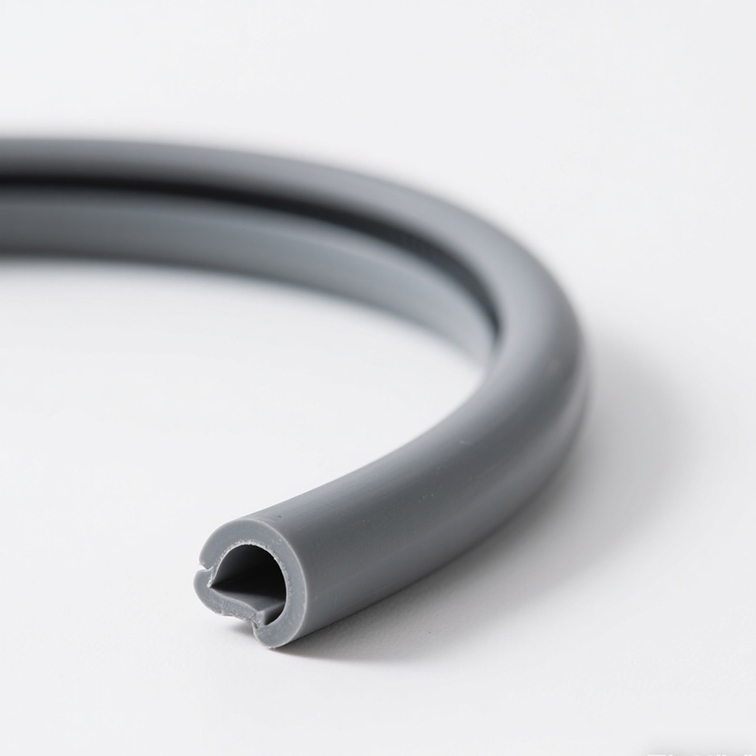
Compression ratio calculations dictate seal survival. You must compress a gasket enough to block fluid paths, but not so much that you rupture the polymer matrix. Over-compression mechanically fractures the cross-links, guaranteeing immediate compression set. Standard industry guidelines recommend 10% to 30% compression for solid silicone. Closed-cell sponge can tolerate up to 50% compression. High temperatures alter these targets post-installation. As the material heats up, it softens slightly. The internal stress relaxes. You must calculate the compression ratio based on the operating temperature, not just the ambient installation temperature.
Follow these steps to determine the correct compression ratio for your application:
Measure the exact cross-sectional height of the uncompressed gasket.
Determine the final compressed height based on the depth of the machined groove or the physical compression stops on the flange.
Subtract the compressed height from the uncompressed height to find the deflection value.
Divide the deflection value by the original uncompressed height.
Multiply by 100 to get the compression percentage. Adjust your groove depth if this number exceeds 30% for solid materials.
Gasket fill is a critical design concept that many engineers overlook. A gasket needs physical space to deform. Rubber is essentially an incompressible fluid. When you apply vertical pressure with flange bolts, the material must expand laterally. If a groove is 100% filled, the incompressible rubber acts like a solid steel block. Additional tightening will cause extrusion, flange distortion, or immediate structural failure of the seal.
You must design grooves that accommodate the volumetric thermal expansion of silicone. Silicone expands at a rate significantly higher than surrounding metals like steel or aluminum. A groove designed for 85% fill at room temperature might reach 98% fill at 200°C. Always calculate the maximum thermal expansion volume before finalizing groove dimensions. If you fail to leave expansion room, the gasket will destroy itself from the inside out as the machinery heats up.
Recommended Groove Fill Percentages by Material
Material Type | Target Room Temp Groove Fill | Maximum Allowable Fill at Operating Temp | Design Consideration |
|---|---|---|---|
Solid Silicone (High Durometer) | 75% - 80% | 90% | Requires heavy rigid flanges to prevent bowing. |
Solid Silicone (Low Durometer) | 80% - 85% | 95% | Flows easier, fills micro-imperfections in metal. |
Closed-Cell Sponge | 85% - 90% | 100% (Compresses internally) | Gas pockets absorb expansion volume safely. |
The mechanical design of flanges and mating surfaces directly impacts seal longevity. Uneven bolting creates localized areas of high compression. Flange deflection between bolt holes reduces compression in the middle of the span. These variations lead to premature compression set in specific zones. The over-compressed areas lose their elastic memory rapidly. The under-compressed areas leak as soon as the system pressurizes.
You must ensure adequate flange stiffness. Specify proper bolt spacing based on the thickness of the metal. Use torque wrenches during installation to guarantee uniform pressure distribution across the entire sealing surface. Implement a star-pattern torque sequence. Tighten bolts in stages rather than torquing one side down completely before moving to the next. This prevents pinching and ensures the gasket seats perfectly flat within the groove.
Commercial ovens operate under brutal, continuous conditions. An oven silicone sealing ring faces continuous high-heat exposure, often exceeding 250°C in bakery or powder coating applications. If the oven processes food, the material must maintain FDA 21 CFR 177.2600 compliance, restricting certain toxic curing agents and fillers. The design must account for repeated door-closure impacts. Every time the heavy metal door slams, the seal absorbs massive kinetic energy.
The profile geometry usually features hollow bulbs or complex lip seals. These shapes provide high deflection with low closure force. They accommodate the thermal expansion of the large metal doors without over-compressing the base material. A solid square profile would require too much force to close the door and would suffer from compression set within weeks. Hollow profiles allow the material to flex and rebound thousands of times without failing.
Aviation applications demand stringent performance metrics that go far beyond basic temperature resistance. An aviation high temperature silicone sheet experiences extreme temperature fluctuations. It might drop to -55°C at high altitudes, becoming brittle, and then spike to 200°C near engine compartments or APU exhaust zones. The material must remain flexible across this entire spectrum to maintain cabin pressure and fluid containment.
Flame retardancy is non-negotiable. The silicone must meet FAR 25.853 flammability standards, self-extinguishing rapidly without dripping flaming particles. Outgassing is another critical factor. Volatile compounds released under heat can fog sensitive optics, coat electronics, or contaminate life support systems. The material must pass ASTM E595 outgassing tests. Furthermore, vibration dampening properties protect delicate avionics from engine harmonics, requiring specific sponge densities to absorb specific frequency ranges.
Standard off-the-shelf seals often fail in legacy equipment or highly specialized machinery. You must specify a custom silicone sheet for unique flange shapes, retrofitted cast iron housings, or oversized pressure vessels. The specification process requires mapping the exact bolt pattern and measuring flange irregularities with precision tools.
Die-cutting precision is paramount when fabricating these custom shapes. Dull tooling creates micro-tears along the cut edges. Under thermal stress and mechanical compression, these micro-tears propagate rapidly. They split the gasket entirely, leading to catastrophic blowout. Waterjet cutting or precision rotary die-cutting ensures clean edges, preserving the structural integrity of the polymer matrix. We always recommend waterjet cutting for thick solid silicone sheets to eliminate the concavity often caused by traditional steel rule dies.
Highly engineered, low-compression-set silicones carry higher upfront costs than standard commercial grades. You must evaluate this against the long-term operational reality of your facility. Frequent maintenance stops drain labor resources. Undetected leaks ruin final products or cause environmental compliance fines. Equipment downtime halts production lines entirely, costing thousands of dollars per hour.
Specifying a premium peroxide-cured silicone with heat-stabilizing fillers extends the maintenance interval significantly. The initial material investment prevents catastrophic failures in high-heat environments. When you calculate the cost of replacing a cheap seal five times a year versus installing a premium seal that lasts three years, the engineering choice becomes obvious. Do not compromise on material chemistry to save pennies on the initial purchase order.
Installation failures destroy perfect designs. Maintenance teams often over-torque bolts to stop a perceived leak. They use impact wrenches instead of calibrated torque wrenches. This action crushes the polymer matrix and destroys the silicone gasket completely. The elastic memory is ruined permanently. The seal might hold pressure for a day, but it will fail as soon as the system undergoes a thermal cycle.
You must implement physical mitigation strategies to protect the seal from human error. Incorporate compression stops directly into the flange design by machining a precise groove. Alternatively, embed metal limiters within the gasket itself. These metal collars surround the bolt holes. They allow the bolts to be torqued tightly against the metal, preventing the rubber from compressing beyond its engineered limit. This guarantees the seal operates exactly within its designed compression ratio, regardless of who installs it.
Never deploy a new seal design in a critical application without physical validation. Prototyping is mandatory. You must interpret ASTM D395 data sheets carefully when evaluating supplier materials. Ensure the test temperature matches your actual operating environment. A material that shows a 10% compression set at 100°C might fail completely and show a 60% set at 200°C. Request specific test data for your target temperature range.
Perform thermal cycling tests on the physical prototypes. Build a small test rig that mimics your flange geometry. Bolt the prototype in place, heat it to the maximum operating temperature, let it cool, and repeat this cycle dozens of times. Open the flange and measure the rebound. This physical testing verifies that the groove geometry accommodates the volumetric expansion without extruding the material and confirms the polymer chemistry holds up to your specific environment.
Preventing compression loss in high-temperature environments demands rigorous engineering. You cannot rely on material properties alone. Success is achieved through a strict combination of low-set material chemistry and expansion-aware physical geometry. The polymer must resist thermal cleavage, and the groove must provide adequate space for thermal expansion.
Take immediate action to secure your equipment and eliminate unplanned downtime:
Audit your current flange designs to ensure they provide adequate groove volume for thermal expansion.
Specify maximum thermal loads and chemical exposures before requesting material samples from suppliers.
Request comprehensive ASTM D395 test data that matches your exact peak operating temperatures.
Implement physical compression stops or metal limiters to prevent maintenance teams from over-torquing the bolts.
Consult with specialized gasket manufacturers to prototype and validate custom formulations in physical test rigs.
A: For high-temperature industrial applications, an acceptable compression set is typically below 15% to 20% when tested under ASTM D395 standards at the application's maximum continuous operating temperature. Lower percentages indicate better elastic memory and longer seal life.
A: Silicone has a high coefficient of thermal expansion. As temperatures rise, the material expands significantly more than the surrounding metal flanges. If the groove lacks extra space, this expansion increases internal pressure, leading to over-compression, extrusion, and permanent structural damage.
A: Peroxide curing creates strong carbon-carbon cross-links between the polymer chains. These specific chemical bonds are highly stable and resist breaking down under extreme heat, allowing the material to maintain its shape and rebound better than standard cure systems.
A: EPDM provides excellent water and weather resistance but its carbon backbone begins to degrade rapidly above 150°C. Silicone utilizes a siloxane backbone that withstands continuous temperatures up to 230°C or higher, making it mandatory for extreme heat applications.
A: Yes. Over-compressing fractures the chemical cross-links within the polymer matrix. This destroys the material's elastic memory. Once the load shifts or thermal contraction occurs, the crushed gasket cannot rebound, resulting in immediate leaks.
A: Solid silicone handles high internal pressures but requires heavy closure forces. Closed-cell silicone sponge contains nitrogen-filled microscopic pockets, allowing it to compress easily and form tight seals on lightweight or irregular flanges without requiring massive bolt torque.


