


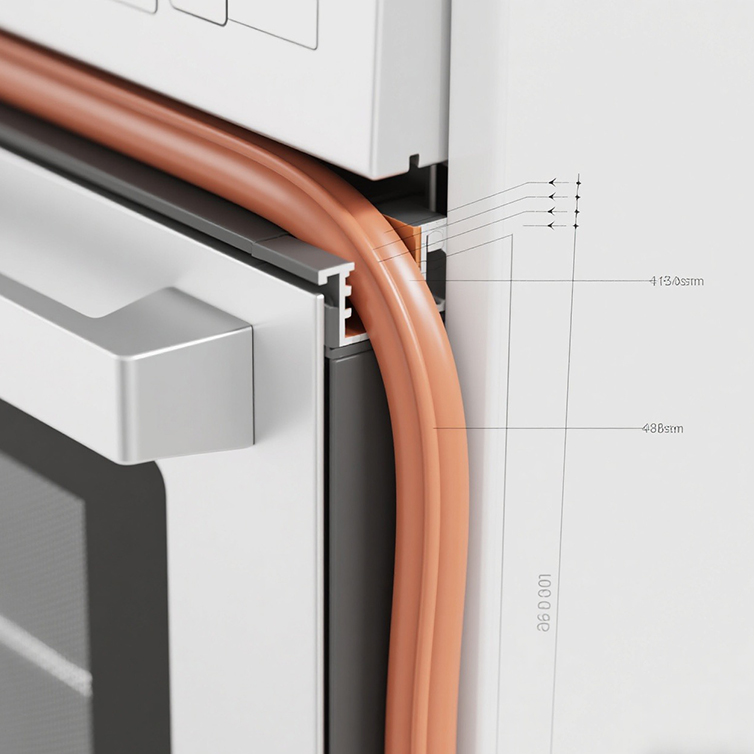


Superior Oven Silicone Gaskets: Your Ideal Choice for Perfect Sealing
Our oven silicone gaskets stand out with a multitude of outstanding features, ensuring top - notch performance in any baking scenario.
Exceptional Temperature Resistance:Made from high - quality silicone, these gaskets can endure temperatures ranging from a frigid - 40°C to a scorching 230°C and even higher in short - term use. Whether your oven is baking a batch of cookies at a high temperature or being pre - heated to a low setting, the gasket remains flexible and fully functional, never cracking or hardening due to temperature changes.
Superior Sealing Performance:With excellent elasticity, our silicone gaskets create an airtight seal between the oven door and the body. This effectively prevents heat leakage during baking, maintaining a consistent internal temperature for evenly cooked food. It also keeps out cold air from the outside, reducing energy consumption and ensuring your oven operates efficiently.
Food - Grade Safety:Compliant with strict food - grade standards, these gaskets are non - toxic, odorless, and free from harmful substances. You don't have to worry about any chemical contaminants leaching into your food, making them a safe choice for family - friendly baking.
Long - Lasting Durability:Resistant to aging, ozone, and UV radiation, these gaskets have a long service life. Even after repeated use and exposure to the harsh oven environment, they maintain their shape, flexibility, and sealing properties, saving you the hassle and cost of frequent replacements.
Easy to Clean:Cleaning the silicone gasket is a breeze. Simply wipe it with a damp cloth or wash it with mild detergent, and it will be as good as new, ready for your next baking adventure.
Frequently asked questions and answers about silicone seals for ovens
1. Q: If the sealing ring is deformed, can it continue to be used?
A: If there is a slight deformation, you can try to reset it after heating; if the deformation is serious or the sealing is poor after reset, it needs to be replaced, otherwise it will lead to heat loss and uneven cooking in the oven.
2. Q: The oil and food residue on the sealing ring are difficult to clean up. What should I do?
A: You can first wipe it with a rag soaked in warm water. For stubborn stains, you can dip it in a small amount of neutral detergent and gently brush it. Avoid using hard tools such as steel wire balls to prevent scratching the sealing ring.
3. Q: After a period of use, the sealing ring is ageing and cracked. What is the reason?
A: It is mainly related to long-term high-temperature baking, frequent friction of opening and closing doors, and improper cleaning (such as the use of strong corrosive detergents). It is recommended to check regularly. Generally, it needs to be replaced after 1-2 years of use.
4. Q: The oven door is not closed tightly. Is it necessarily a problem with the sealing ring?
A: Not necessarily. In addition to the ageing and displacement of the sealing ring, the oven door hinge may also be loose or deformed. You can first check whether the sealing ring is intact, then check the hinge, and contact a professional for repair if necessary.
5. Q: When replacing the sealing ring, how to ensure that it is installed in place?
A: First, remove the old sealing ring, clean up the impurities in the slot, and then aim the groove of the new sealing ring at the slot, and press it evenly to ensure that there are no bumps or gaps. After installation, you can close the oven door to check the sealing.


