
Author: Site Editor Publish Time: 2026-08-07 Origin: Site
Unexpected flow interruptions severely impact continuous manufacturing and processing environments. Pressure drops trigger system alarms and halt production lines instantly. Batch contamination ruins entire runs, forcing disposal and extensive sterilization cycles. Pump failures, driven by fluid starvation or cavitation, demand immediate maintenance intervention. Legacy tubing materials often serve as the hidden culprits behind these bottlenecks. Standard rubber and PVC succumb to kinking under tight routing. Internal deposits build up over time, occluding the flow path. Dynamic fatigue destroys structural integrity during continuous pumping. Material degradation accelerates rapidly under thermal stress and chemical exposure. Facilities require a reliable, engineered alternative to maintain operations. Industrial Silicone Tubing provides a targeted solution for maintaining consistent volumetric flow rates. Its unique polymer structure resists mechanical wear and environmental degradation. Evaluating the technical criteria of this material ensures its viability for specific fluid transfer processes.
Friction and Deposit Mitigation: The exceptionally smooth interior surface of silicone minimizes fluid friction and prevents the accumulation of particulates that cause flow restriction.
Structural Resilience and Fatigue Resistance: High tensile strength and superior flexibility allow silicone to maintain its shape, resist wear out, and prevent kinks even in tight routing configurations or continuous pumping applications.
Environmental and Thermal Stability: Resistance to extreme temperatures, UV, and ozone prevents the hardening, wrinkling, and embrittlement that typically degrade standard elastomers over time.
Process-Specific Selection: Choosing between an industrial grade silicone tube and specialized compliance grades (e.g., food or medical) is critical for balancing lifecycle costs, process demands, and regulatory requirements.
Uninterrupted flow relies on strict adherence to baseline performance metrics. Systems must maintain consistent pressure across all transfer lines from the pump discharge to the final dispensing point. Predictable flow rates ensure downstream equipment receives exact fluid volumes without hesitation or surging. Minimal maintenance interventions signify a stable, optimized process where operators do not need to constantly adjust valves or replace blown lines. Engineers measure success by tracking the frequency of pressure drops and the volume of fluid delivered per minute. Any deviation from these metrics indicates a developing restriction inside the conduit. Tubing must sustain its internal geometry under varying operational loads. Maintaining laminar flow prevents turbulence, which can cause shear-sensitive fluids to degrade or foam. Achieving these criteria requires materials that do not alter their physical state during heavy operation.
Flow restriction stems from specific physical failures within the transfer line. Kinking represents the most immediate bottleneck we see in the field. When a tube bends beyond its minimum bend radius, the outer wall stretches too far while the inner wall compresses, causing the structure to collapse inward and instantly choke the fluid path. Internal friction slows fluid velocity, forcing pumps to work harder to maintain output and drawing excess amperage. Particulate buildup at the boundary layer gradually narrows the internal diameter. As deposits accumulate, the available cross-sectional area shrinks. This creates a localized pressure drop that starves downstream processes. Fluids with high viscosity exacerbate this issue, adhering stubbornly to rough interior surfaces. Identifying these bottlenecks early prevents sudden system shutdowns and expensive equipment damage.
Continuous compression destroys standard elastomers rapidly. Peristaltic pumps rely on rotating rollers repeatedly crushing the tubing against a housing to push fluid forward. This mechanical action generates immense localized stress and friction heat. Standard materials lose their elasticity over thousands of compression cycles. They fail to rebound to their original shape, reducing the volume of fluid moved per stroke and causing flow rates to drift. Eventually, the material wears out entirely. Micro-tears form along the compression line where the roller impacts the polymer. These tears propagate through the wall thickness, leading to sudden ruptures, fluid leaks, and complete flow cessation. Dynamic fatigue requires tubing with high rebound resilience to survive high-cycle fluid transfer processes without shedding particles into the fluid stream.
Environmental stressors attack the chemical bonds of tubing materials relentlessly. High heat accelerates polymer breakdown, causing standard plastics to soften, balloon under pressure, or melt entirely. Pressure cycling expands and contracts the tube walls repeatedly, weakening the structural integrity over time. Chemical exposure leaches plasticizers from PVC and synthetic rubber. This leaching leaves the material brittle, discolored, and highly prone to cracking under minor vibration. Ozone and UV light cause surface oxidation on natural rubber lines. The tubing hardens, wrinkles, and eventually collapses under vacuum loads. Material degradation is rarely instantaneous. It manifests as a slow decline in performance, ending in an unexpected flow interruption. Selecting materials inherently resistant to these factors is non-negotiable for long-term stability.
The extrusion process of a silicone tube creates an exceptionally smooth interior surface. This smooth bore fundamentally alters fluid dynamics within the line. It reduces the friction coefficient at the boundary layer where the fluid meets the wall. Fluids glide through the system with minimal resistance, maintaining higher velocities at lower pump speeds. This lack of surface roughness prevents deposit adhesion. Particulates and viscous fluids find no microscopic crevices to anchor against. The internal diameter remains fully open and clear over extended operational periods, even when transferring sticky or heavy media. Reduced drag means pumps operate at lower energy loads and experience less wear. Consistent internal geometry guarantees predictable, uninterrupted volumetric flow from the beginning of a batch to the end.
Silicone elastomers possess remarkable flexibility combined with high tensile strength. The material bends and stretches without undergoing permanent plastic deformation. When routed through tight spaces, complex manifolds, or around sharp corners, the tube maintains its circular cross-section. It resists the structural collapse that causes kinking. The polymer chains stretch to accommodate the bend, then return to their original state once the tension is released. This kink resistance ensures the internal diameter remains constant regardless of complex routing configurations. Engineers can design compact fluid transfer skids without worrying about flow occlusion at the corners. You do not need to rely on rigid molded elbows to navigate tight turns, which eliminates potential leak points at the fittings.
Silicone thrives under repeated mechanical stress. Its cross-linked siloxane backbone provides superior rebound elasticity compared to organic rubbers. In peristaltic pumping applications, the tubing compresses flat under the roller and instantly recovers its full shape once the roller passes. It withstands millions of compression cycles without losing structural integrity or suffering from compression set. The material does not work-harden or become brittle from continuous flexing. It resists the formation of micro-tears along the flex points, preventing spalling where particles shed into the fluid. This dynamic fatigue resistance makes it highly unlikely to wear out or break during critical high-cycle fluid transfer processes. System uptime increases directly as a result of this mechanical durability.
Extreme temperatures do not compromise silicone's physical properties. It remains flexible at -60°C and maintains structural integrity up to 200°C. Standard elastomers harden in the cold and melt in the heat. Silicone ignores these extremes, allowing you to run chilled glycol or high-temperature steam through the same line without changing materials. Furthermore, the material possesses inherent resistance to ozone and UV radiation. Outdoor applications or high-ozone environments near electrical generators do not cause surface oxidation. The tubing will not prematurely harden, wrinkle, or embrittle when exposed to the elements. This thermal and environmental stability ensures the flow path remains secure, regardless of the external operating conditions or aggressive cleaning cycles.
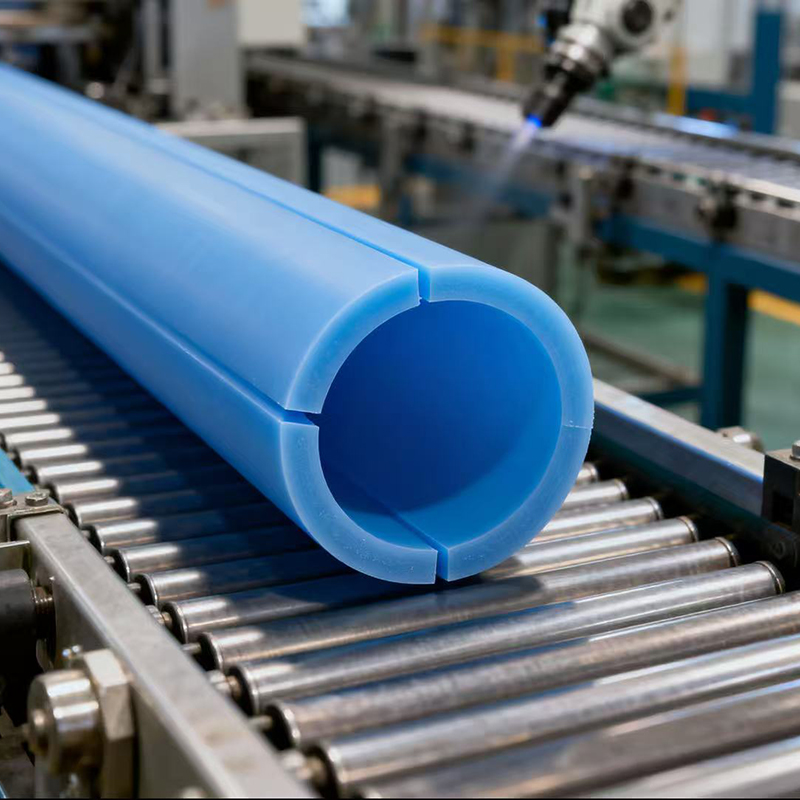
Selecting the correct tubing requires matching material properties to operational demands. Static fluid transfer lines prioritize long-term environmental resistance and basic flow maintenance. Dynamic applications, such as peristaltic pumping or robotic arm routing, demand maximum fatigue resistance and rebound elasticity. High-pressure systems require structural reinforcement to prevent bursting under load. High-purity applications mandate non-leaching, biologically inert materials to protect the product. Engineers must audit their specific process parameters before specifying a material. Operating temperature, fluid viscosity, system pressure, and routing complexity dictate the required performance profile. A mismatch here guarantees eventual flow interruption. You cannot use a standard unreinforced line for a high-vacuum suction application without it collapsing.
Standard industrial formulations prioritize rugged durability and operational efficiency. An industrial grade silicone tube handles general fluid transfer, cooling lines, and non-critical chemical routing with ease. It utilizes peroxide curing methods to achieve high mechanical strength and tear resistance. For demanding environments, specialized formulations become necessary. Platinum-cured silicone offers higher purity and smoother surfaces, ideal for sensitive fluids where peroxide byproducts are unacceptable. Fabric or wire-reinforced silicone handles elevated pressures and vacuum applications that would collapse standard unreinforced tubing. Choosing between industrial and specialized grades depends entirely on the mechanical limits of the specific application. You must evaluate the maximum working pressure and the required safety factor before making a selection.
Regulatory requirements dictate material selection in consumable and pharmaceutical processing. A food grade silicone tube undergoes strict manufacturing controls to ensure compliance with FDA and NSF standards. The decision framework focuses on non-leaching properties. The tubing must not impart odors, flavors, or harmful chemicals into the fluid stream. Platinum curing is often utilized to eliminate peroxide byproducts and achieve a perfectly clear finish. Sterilization compatibility is also critical. Food grade options withstand repeated autoclave, CIP (Clean-in-Place), and SIP (Sterilize-in-Place) cycles at temperatures exceeding 130°C without degrading. Specifying compliant tubing protects both the product batch and the end consumer from contamination.
Dimensional accuracy prevents mechanical failure. Selecting the correct internal diameter (ID) and outer diameter (OD) of a silicone fluid transfer tube is an exact science. The ID dictates the maximum flow rate and fluid velocity. An undersized ID increases friction, elevates system pressure, and forces the pump to work harder. The wall thickness determines pressure handling and vacuum resistance. Thin walls collapse under suction, interrupting flow immediately. Thick walls handle higher pressures but reduce overall flexibility, making routing more difficult. Engineers must calculate the required hoop stress and vacuum ratings to specify dimensions that will not fail under operational loads. Always account for thermal expansion when sizing lines for high-temperature fluids.
Routing complex fluid systems highlights the differences between elastomers. Polyurethane offers high abrasion resistance but suffers from a larger minimum bend radius. Forcing polyurethane into tight corners results in immediate kinking and flow blockage. PVC is inexpensive but highly rigid, requiring molded elbows to navigate turns, which introduces multiple potential leak points. Rubber provides moderate flexibility but degrades rapidly under stress, cracking at the bend apex. Silicone offers superior routing flexibility. It achieves a significantly tighter bend radius without flow occlusion. Engineers can route silicone through cramped machinery, tight enclosures, and complex manifolds where PVC or rubber would fail mechanically. This flexibility speeds up installation and reduces the need for extra fittings.
No single elastomer handles every chemical perfectly. Silicone excels in transferring water, air, ozone, and specific mild chemicals. It resists degradation from alcohols and sodium hydroxide. However, it possesses known limitations that you must account for. Silicone exhibits high gas permeability, making it unsuitable for strict gas containment where permeation is a concern. It is generally incompatible with concentrated acids, strong solvents, and certain petroleum-based oils. Exposure to these aggressive chemicals causes silicone to swell, soften, and lose tensile strength rapidly. PVC handles strong acids better but leaches plasticizers into the fluid. Rubber handles oils well but fails under UV exposure. Objective assessment of the fluid media prevents catastrophic chemical degradation.
Operational continuity depends on predictable maintenance schedules. PVC and standard rubber require frequent replacement due to rapid hardening and fatigue failure. This frequent changeover increases maintenance labor and halts production lines repeatedly. Silicone demands a higher initial procurement investment but drastically alters the replacement timeline. Its resistance to thermal degradation and dynamic fatigue extends its operational lifespan significantly. Facilities replace silicone lines far less often than alternative elastomers. This reduction in replacement frequency directly minimizes system downtime and keeps continuous manufacturing processes running without unexpected mechanical interruptions. You spend less time pulling old lines and more time producing product.
Elastomer Performance Comparison
Material | Flexibility / Bend Radius | Thermal Stability | Dynamic Fatigue Resistance | Chemical Limitations |
|---|---|---|---|---|
Silicone | Excellent (Tight bend radius, no kinking) | -60°C to 200°C | Superior (Ideal for peristaltic pumps) | Concentrated acids, petroleum oils |
PVC | Poor (Rigid, prone to kinking) | -10°C to 60°C | Low (Hardens and cracks quickly) | Solvents, high heat |
Polyurethane | Good (High abrasion resistance) | -30°C to 80°C | Moderate | Strong acids, bases |
Natural Rubber | Moderate | -50°C to 80°C | Moderate (Degrades under UV/Ozone) | Ozone, UV, strong solvents |
EPDM | Moderate | -40°C to 150°C | Good | Petroleum oils, concentrated acids |
Operational abuse accelerates material failure regardless of the polymer. Exceeding rated pressure limits causes the tube walls to balloon and thin out, leading to ruptures and hazardous spills. Operating beyond maximum temperature thresholds initiates premature polymer breakdown. Subjecting unreinforced tubing to high vacuum causes wrinkling and internal collapse, completely stopping flow. To mitigate these risks, engineers must specify reinforced tubing for any application approaching the material's baseline limits. Polyester braid reinforcement handles elevated internal pressures effectively. Stainless steel wire reinforcement prevents vacuum collapse under heavy suction. Matching the physical reinforcement to the operational stress eliminates the root causes of premature wear and extends the life of the transfer line.
Incorrect installation creates mechanical stress before the pump even turns on. Follow these exact steps to ensure a secure, long-lasting connection:
Measure the exact routing distance, allowing a 5% slack margin to accommodate thermal expansion and pressure surges.
Cut the tubing cleanly at a perfect 90-degree angle using a specialized tube cutter to ensure proper seating on barbed fittings.
Select the appropriate barbed fitting that matches the exact internal diameter of the line to prevent stretching or loose fits.
Push the tubing fully over all barbs without using petroleum-based lubricants, which can degrade the silicone.
Secure the connection using constant-tension clamps placed directly over the barb zone, avoiding over-tightening that cuts into the wall.
Support long horizontal runs using P-clamps or cable trays every 18 inches to prevent sagging and fluid pooling.
Early detection of flow restriction saves equipment from catastrophic failure. Watch for these specific indicators:
Kinking at corners: Indicates the bend radius is too tight. Adjust the routing path or install a 90-degree elbow fitting to relieve the stress.
Wrinkling under suction: Points to insufficient wall thickness for the vacuum load. Upgrade to a thicker wall or wire-reinforced line instantly.
Cloudy discoloration: Suggests chemical attack or residue buildup. Verify the chemical compatibility of the fluid media against the silicone formulation.
Loss of elasticity: Means the polymer bonds are breaking down from excessive heat or chemical exposure. Replace the line and audit the operating temperature.
Ballooning near fittings: Indicates system pressure exceeds the unreinforced tubing limits. Switch to a braid-reinforced option.
Proactive maintenance prevents unexpected downtime. Facilities must establish a rigid inspection schedule based on operational hours rather than waiting for a failure. Technicians should visually inspect lines for micro-tears, especially near fittings and pump rollers where stress concentrates. Discoloration or cloudiness often indicates chemical attack or residue buildup that CIP cycles missed. A loss of elasticity—where the tube feels hard or fails to rebound when pinched—signals advanced thermal or chemical degradation. Documenting these physical changes allows maintenance teams to replace the tubing during scheduled downtime, entirely avoiding critical flow interruptions during live production runs. Keep detailed logs of replacement intervals to optimize your maintenance schedule.
Audit your current fluid transfer lines to identify specific zones experiencing frequent pressure drops, kinking, or premature wear.
Consult with a fluid transfer engineer to match specific silicone formulations and reinforcements to your exact operating temperatures and chemical media.
Request material samples to conduct in-situ testing under actual production loads before committing to a full facility upgrade.
Update your maintenance protocols to include weekly visual inspections for micro-tears, discoloration, and elasticity loss.
A: Kinking occurs when the tube is bent beyond its minimum bend radius, causing the walls to collapse inward. It also happens if the tubing is improperly sized or if the selected wall thickness is too thin to support the routing angle. Using thicker walls prevents this issue.
A: Standard unreinforced silicone expands and bursts under high pressure. For high-pressure applications, the tubing must be reinforced with polyester fabric, fiberglass, or stainless steel wire. This reinforcement contains the hoop stress and prevents bursting or vacuum collapse.
A: Silicone possesses exceptional rebound elasticity and high tensile strength. It can withstand millions of continuous compression cycles from pump rollers without work-hardening, losing its shape, or developing micro-tears. This fatigue resistance prevents sudden mechanical failure and maintains consistent flow rates.
A: Yes. Silicone has inherent chemical resistance to UV radiation, ozone, and extreme weather fluctuations. Unlike natural rubber or PVC, it will not oxidize, harden, wrinkle, or become brittle when exposed to continuous outdoor environments or direct sunlight.
A: Food grade silicone is typically platinum-cured to eliminate peroxide byproducts and ensure high purity. It is manufactured in strict, clean environments to meet FDA and NSF regulatory standards, ensuring it does not leach chemicals, odors, or flavors into consumables.
A: Replacement frequency depends entirely on operational variables. Factors include the number of daily compression cycles, operating temperature, chemical exposure, and sterilization frequency. Facilities should establish replacement schedules based on regular physical inspections rather than a fixed timeline.
A: Yes. The exceptionally smooth interior reduces boundary layer friction and drag. This allows fluid to flow with less resistance, lowering the energy and pressure required by the pump to maintain specific volumetric flow rates, thereby increasing overall system efficiency and reducing wear.


