
Author: Site Editor Publish Time: 2026-06-25 Origin: Site
Silicone sheets are highly specialized materials used across vastly different sectors. You can find them driving clinical scar management, commercial baking, and heavy industrial sealing. Their incredible versatility makes them indispensable for modern applications. Choosing the wrong grade, thickness, or compliance standard causes serious issues. Mistakes lead to failed clinical outcomes, strict food safety violations, or sudden equipment malfunction. You must match the material properties to your precise operational environment. This guide breaks down the specific applications of these versatile materials. We explain the underlying mechanisms of why they work so effectively. You will also get a clear evaluation framework to purchase the exact type for your needs.
Medical Efficacy: Clinical-grade silicone sheets work through occlusion and hydration, providing an evidence-backed method for flattening and softening hypertrophic and keloid scars.
Commercial Food Prep: Food-grade silicone offers a reusable, high-thermal-stability alternative to single-use parchment paper, heavily impacting long-term cost savings.
Industrial Durability: A standard silicone rubber sheet provides essential chemical resistance and extreme temperature tolerance for manufacturing gaskets and insulators.
Purchasing Logic: Selection must be driven by strict compliance requirements (e.g., ISO for medical, FDA/LFGB for culinary) rather than baseline material cost.
Buyers often question material selection during the procurement process. They wonder why engineers specify silicone over cheaper alternatives like polyurethane, standard rubber, or coated paper. The answer lies in its unique molecular structure. Silicone consists of an alternating silicon-oxygen backbone. This robust chemical bond delivers superior performance metrics across multiple challenging environments. It simply outperforms traditional organic polymers when pushed to the limit.
Understanding these core mechanisms helps you predict functional outcomes. The material works through three primary scientific pathways:
Thermal Stability: Silicone maintains absolute structural integrity across extreme temperature ranges. It functions flawlessly from a freezing -60°C up to a scorching +230°C. Standard rubber turns brittle in extreme cold. It melts or degrades in extreme heat. Silicone remains entirely stable.
Biocompatibility and Inertness: The material is fundamentally chemically inert. It does not react dynamically with human tissue, volatile food compounds, or most harsh industrial chemicals. This ensures safe prolonged contact.
Moisture Regulation (Occlusion): Clinical environments rely heavily on this trait. The material mimics the human skin’s natural barrier function. This barrier is known as the stratum corneum. The sheet locks in essential moisture while permitting minimal oxygen transmission. This specific balance promotes ideal healing environments.
Material Trait | Standard Rubber | Polyurethane | Silicone |
|---|---|---|---|
Temperature Range | -20°C to 90°C | -30°C to 80°C | -60°C to 230°C |
Biocompatibility | Poor | Moderate | Excellent |
Chemical Inertness | Low | Moderate | High |
Dermatologists and plastic surgeons frequently rely on this material for post-surgical recovery. It serves as a primary treatment for burn trauma and localized scar reduction. The sheets target both keloid and hypertrophic scar formations. They flatten raised tissue and normalize discoloration over several months of consistent use. Patients experience less itching and pain during the healing phase.
You must evaluate clinical efficacy based on two critical dimensions. The first is the mechanism of action. The sheet applies continuous hydration alongside light mechanical tension. This combination successfully down-regulates abnormal collagen production. The second dimension involves the form factor. Medical variations are self-adhesive, highly breathable, and remarkably flexible. They stretch easily to accommodate continuous joint movement.
Patients often debate between solid sheets and topical gels. You should understand the functional trade-offs of both options.
Evaluation Criteria | Silicone Sheets | Topical Scar Gels |
|---|---|---|
Coverage and Pressure | Provides continuous physical coverage and mechanical pressure. | Lacks mechanical tension entirely. |
Visibility and Wear | Can be highly visible. Hard to secure on active joints. | Dries invisible. Excellent for exposed facial applications. |
Application Frequency | Worn continuously for 12-24 hours per day. | Requires frequent daily reapplication. |
Implementation requires strict hygiene protocols. Users face potential risks like skin maceration or contact dermatitis. Maceration occurs when trapped sweat breaks down healthy skin. You avoid this by following gradual wear-time protocols. Start with a few hours daily and slowly increase the duration. You must wash the area daily.
Commercial kitchens utilize these products as non-stick baking mats, custom freezing trays, and processing conveyor liners. The material transforms how modern bakeries handle sticky or delicate items. It eliminates the need for messy aerosol greases. You get perfectly released baked goods every single time.
Evaluating kitchen utility requires examining strict safety compliance. Any product touching consumables must be explicitly rated as food-grade material. Look for FDA approval in the United States. Seek LFGB certification for European markets. The evaluation also heavily weighs the cost-to-lifespan ratio. A reusable mat demands a higher upfront investment compared to disposable paper liners. However, it effortlessly delivers thousands of dependable reuse cycles.
Let us compare baking mats against traditional parchment paper. Silicone offers distinctly superior heat distribution. It generates absolutely zero daily waste. Its heavier physical weight reliably prevents curling under convection fans. Parchment paper requires a lower initial cash outlay. It also performs slightly better for achieving ultra-crispy bottom textures. A solid baking mat can sometimes insulate too much and unexpectedly retain surface moisture.
Operators must monitor specific implementation risks. The material can retain stubborn food odors or residual oils over time. Deep cleaning usually resolves this minor issue. Physical degradation represents a more permanent risk. You will ruin the structural integrity instantly if you cut food directly on the mat using sharp knives.
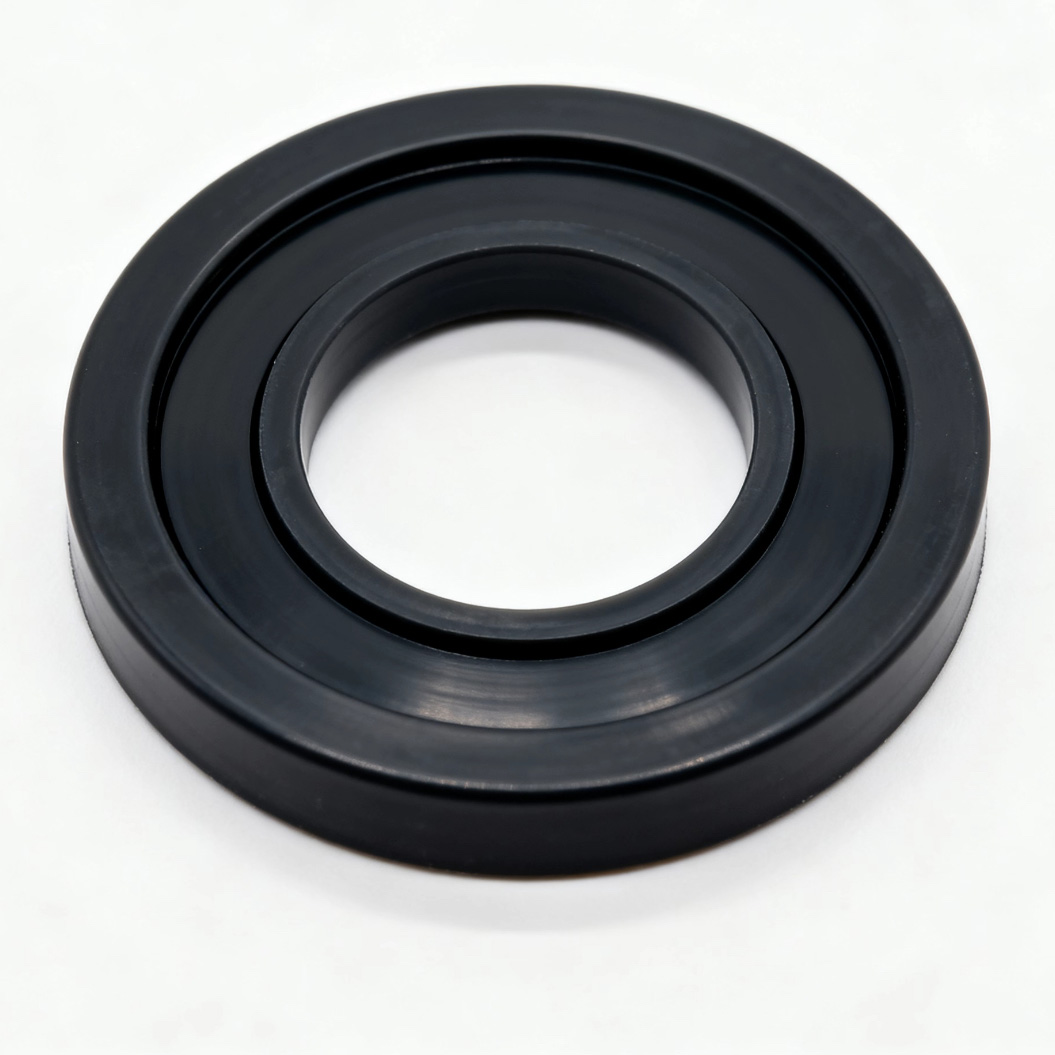
Heavy industry depends heavily on this robust material. Manufacturers shape it into durable gaskets, dependable environmental seals, and reliable electrical insulation. It also functions perfectly for mechanical vibration dampening. Factory floors present extremely hostile operating environments. The material handles these brutal conditions effortlessly.
Evaluating an industrial silicone rubber sheet requires analyzing three specific mechanical dimensions:
Durometer (Hardness): Engineers assess the Shore A scale meticulously. You must balance the necessary flexibility against the required load-bearing capacity. A lower number indicates a softer, highly compressible seal.
Tensile Strength and Elongation: This evaluates stretching capabilities. You need to know how much the material can stretch before ultimately tearing under operational stress. High elongation handles dynamic joint movement safely.
Chemical Resistance: The material naturally shows excellent resistance against harsh UV rays, ozone, and general weathering. However, it remains vulnerable to certain industrial solvents and concentrated hydrocarbon oils.
Scalability heavily influences procurement strategies. Facilities frequently debate buying massive bulk rolls versus ordering pre-cut dimensions. Buying bulk rolls offers logistical flexibility for on-site fabrication. Ordering pre-cut shapes saves immediate labor time. You must constantly assess batch-to-batch consistency. Strict manufacturing compliance depends entirely on uniform raw material quality.
Navigating the diverse marketplace requires a logical decision framework. You cannot judge medical supplies using industrial metrics. Follow this structured approach to pinpoint your exact requirements quickly.
Identify the Compliance Standard: You must immediately rule out any product lacking necessary certifications for your specific industry. Demand CE or FDA marks for medical applications. Verify Food-Safe ratings for culinary uses. Confirm precise industrial grades for manufacturing environments.
Determine Thickness and Flexibility: Thicker material inherently offers better physical durability and thermal insulation. However, it strongly sacrifices conformability. High conformability proves crucial for both uneven human skin topography and complex mechanical joints.
Assess Adhesive Requirements: Ask exactly how the material will attach to your target surface. Does your specific application require intrinsic tackiness like a scar patch? Do you need secondary mechanical fastening for heavy equipment gaskets? Perhaps you require a completely smooth, non-stick surface for a commercial bakery tray.
You must practice absolute trust and verification during procurement. Avoid any manufacturer making bold absolute claims. Phrases like "100% scar removal" or "completely indestructible" signal immediate red flags. You should look for highly transparent technical data sheets instead. These documents must list exact temperature thresholds, validated tear strength, and legitimate clinical trial references. Choosing the right Silicone Sheet relies entirely on verifying hard data.
The term "silicone sheet" operates purely as a broad umbrella category. A successful real-world application depends entirely on properly matching the specific material grade to your exact operational environment. You cannot swap medical, culinary, and industrial variations safely. They serve fundamentally different purposes.
While the initial procurement costs for medical or industrial grades sit higher than standard material alternatives, they deliver undeniable long-term value. You realize superior ROI directly through thousands of reuse cycles, outstanding environmental durability, and highly verifiable clinical or functional outcomes.
Before requesting supplier quotes or finalizing a major purchase, consult your specific use-case specifications immediately. Speak directly to a certified surgeon for personalized scar care advice. Check your commercial oven temperature limits thoroughly for baking applications. Review your engineering blueprints and mechanical specs closely for industrial gaskets. Taking this simple next step prevents costly misapplications.
A: No. Medical-grade versions undergo rigorous testing for safe biocompatibility, reliable sterility, and specific moisture-vapor transmission rates. Industrial grades frequently contain toxic curing agents entirely unsuitable for human skin contact.
A: Medical versions typically last 14 to 28 days with careful daily washing. Culinary baking mats easily endure 2,000 or more heating cycles. Industrial gaskets last for many years depending on specific environmental exposure.
A: Natural dead skin cells and daily body oils quickly degrade the delicate adhesive surface. Daily cleaning using a mild, oil-free soap restores the necessary tackiness. However, gradual natural degradation over several weeks remains inevitable.
A: It depends entirely on the operational environment. Silicone dramatically outperforms polyurethane during extreme temperature fluctuations and heavy UV exposure. Polyurethane generally offers noticeably superior resistance against heavy mechanical abrasion and physical tearing.


