
Author: Site Editor Publish Time: 2026-10-05 Origin: Site
Tired of delicate pastries sticking to pans and tearing at the edges? Single-use parchment paper creates endless daily waste. Meanwhile, scrubbing baked-on, carbonized grease remains a highly frustrating chore that drains your time. A modern kitchen demands smarter solutions. From an engineering and material science perspective, optimizing your prep workflow requires tools built for thermal stability and endurance. Whether you run a bustling commercial bakery or simply love crafting meals at home, upgrading your equipment yields immediate results. In this comprehensive guide, we explore the top culinary applications, safety standards, and practical maintenance tips for these essential polymer tools.
Before diving into the technical specifications, it helps to understand the primary benefits of integrating these tools into your workspace. The table below outlines the core advantages and return on investment of making this simple upgrade.
Core Benefit | Practical Application | Impact on Kitchen Workflow |
|---|---|---|
Ultimate Versatility | Used for baking, freezing, kneading, roasting, and crafting. | Eliminates the need to purchase multiple specialized liners for different temperature extremes. |
Eco-Friendly & Cost-Effective | Replaces single-use parchment paper and aluminum foil. | Significantly reduces recurring kitchen expenses and minimizes daily household waste generation. |
Superior Safety | Food-grade materials withstand high heat up to 480 degrees Fahrenheit. | Ensures no harmful chemicals or microplastics leach into food during high-temperature roasting. |
Effortless Maintenance | Naturally non-stick surface repels stubborn grease. | Reduces cleanup time to mere minutes, requiring only a simple wash with warm soapy water. |
What exactly makes this tool so effective? A high-quality Non Stick Silicone Pad is a highly durable, reusable foundation designed for extreme temperature fluctuations. Unlike traditional metal baking sheets that demand heavy greasing, these mats are engineered for longevity. They rely on a precise composite blend of materials to remain flexible yet structurally stable under intense heat.
The remarkable performance lies in its composite construction. The exterior consists of food-grade silicone. This synthetic polymer features strong siloxane bonds, providing extreme temperature resistance and an inherently slick finish.
However, pure silicone lacks structural rigidity. It stretches and warps under heat. To resolve this mechanical weakness, manufacturers embed a tightly woven fiberglass mesh core within the polymer layers. This fiberglass skeleton serves two critical functions. First, it prevents tearing and maintains tensile strength even after thousands of uses in a commercial kitchen. Second, the mesh acts as a highly efficient thermal conductor. It absorbs oven heat and distributes it evenly across the entire surface. This eliminates the hot spots common on bare aluminum pans, ensuring your baked goods rise uniformly.
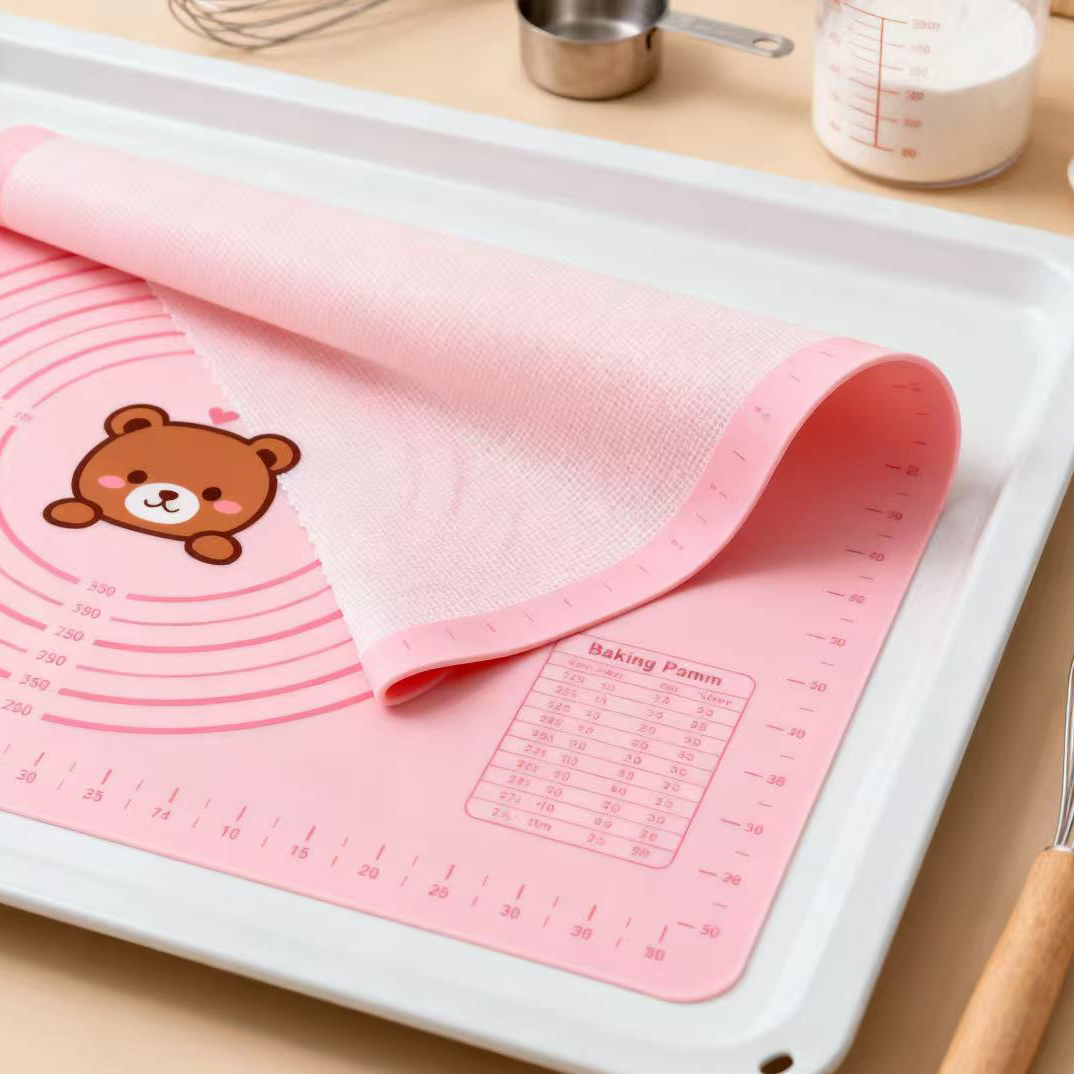
The adoption of these tools has skyrocketed across both domestic and commercial environments. Consumers primarily invest in these items to streamline cooking processes and improve the consistency of their output.
In the realm of baking, thermal control is everything. A premium Baking Mat fundamentally alters how delicate dough interacts with heat. When baking cookies on a bare metal pan, direct heat causes the butter to melt rapidly. This leads to excessive spreading and burnt bottoms. The insulating properties of the silicone slow down this heat transfer just enough to allow the structure to set. Specifically, delicate items like macarons, croissants, and tuiles release effortlessly without tearing.
While often associated with sweet treats, their utility extends far into savory cooking. Roasting vegetables or baking marinated meats often results in a sticky, carbonized mess that ruins expensive aluminum sheets. By laying a Tray Liner down first, you create an impenetrable shield. Acidic marinades and sugary glazes never touch the metal pan. Because the material is completely non-porous, caramelized sugars slide right off during washing. Delicate fish skins remain intact when flipped.
Beyond the oven, these mats serve as exceptional prep stations. The bottom grips the counter tightly, while the top remains slick. This creates an incredibly stable surface for rigorous manual work. Bakers use them for kneading bread dough with minimal dusting flour. Pastry chefs working with molten caramel, pulling taffy, or tempering chocolate rely on this surface because sticky substances simply will not adhere.
Looking at recent market shifts, there is a massive movement toward sustainable, multi-functional kitchenware. As inflation drives up supply costs, commercial kitchens and home chefs alike are scrutinizing their recurring expenses. Industry data shows an unprecedented demand for reusable, high-temperature silicone baking materials in the food service sector. This surge is largely driven by a desire to eliminate the recurring costs of disposable liners. Professionals want zero-waste solutions that maintain commercial-grade, non-stick performance. The focus has moved entirely from cheap disposable papers to engineered composite materials that elevate the final dish while drastically reducing environmental impact.
The extreme versatility of this composite material extends well beyond standard roasting. Its unique thermal properties make it invaluable in various specialized scenarios.
Silicone withstands extreme temperature fluctuations on both ends of the spectrum. Just as it handles a commercial oven, it remains completely flexible in sub-zero environments. Culinary professionals utilize these mats in blast chillers and deep freezers. They provide the perfect surface for setting chocolate-covered strawberries or freezing individual portions of dumplings. You can simply peel the flexible mat away from the frozen items without breaking them apart.
Furthermore, the non-slip and non-toxic nature of this technology proves highly valuable in caregiving environments. Maintaining a clean eating space in daycares or pediatric wards is a daily challenge. Placing a durable pad underneath a dining setup acts as a protective placemat. When paired with a specialized Silicone Plate, it creates a mess-free dining environment. The natural grip prevents accidental spills by uncoordinated hands.
Outside the culinary world, artists and DIY enthusiasts have adopted these mats as essential workspace protectors. Because almost nothing permanently adheres to high-grade silicone, crafters use them for messy projects involving epoxy resin, acrylic paints, and hot glue guns. Once the resin cures, it effortlessly pops off the surface.
When evaluating kitchen equipment, consumers inevitably compare modern silicone solutions to traditional parchment paper. Both prevent food from adhering to pans. However, their long-term value and functional performance differ significantly.
From a financial perspective, the initial acquisition cost of a reusable mat is higher. Yet, the long-term cost analysis heavily favors silicone. A standard roll of parchment paper yields roughly 40 to 60 uses. For frequent bakers, this recurring expense accumulates rapidly. In contrast, a fiberglass-reinforced mat is engineered to withstand up to 3,000 baking cycles. Over a standard two-year period, a household baking twice a week will spend significantly more on disposable paper than a one-time purchase of a durable mat.
The shift toward zero-waste kitchens accelerates the adoption of reusable alternatives. Parchment paper is often coated with quilon or a thin chemical layer to make it non-stick. Because of this coating and absorbed food oils, used parchment is rarely recyclable. A reusable mat eliminates this constant landfill waste.
In addition, silicone offers superior convenience. Parchment paper curls at the edges and blows over food in convection ovens. A pre-sized mat lies perfectly flat. It provides a weighted base that stays put under convection fans, ensuring consistent results every single time you cook.
Consumer safety remains the top priority when introducing synthetic materials to high heat. Extensive testing confirms that food-grade silicone is exceptionally safe, provided it is used correctly within its engineered parameters.
The fundamental safety of these products relies on their thermal stability. High-quality silicone withstands extreme fluctuations without melting or outgassing. Standard commercial mats operate safely between negative 40 degrees Fahrenheit and 480 degrees Fahrenheit. Within this thermal window, the material remains completely inert. Exposing the material to temperatures exceeding 500 degrees Fahrenheit, or placing it under a direct broiler, causes thermal degradation. When broken down under excessive heat, it releases white smoke and permanently loses its non-stick properties.
Verifying regulatory certifications is essential. Look for products clearly labeled as completely food-grade and BPA-free. Premium silicone does not contain phthalates or lead. Because it is a stable polymer, it does not shed microplastics into your meals. As long as the mat remains unpunctured, the inner fiberglass stays securely sealed, posing absolutely no risk of food contamination.
To maximize the lifespan of your baking equipment, follow proper maintenance protocols. Specific handling practices prevent premature wear and maintain the slick surface.
When unboxing a new mat, wash it thoroughly with warm, soapy water to remove manufacturing dust. Once dry, it is ready for immediate use. A common mistake is applying cooking sprays or butter to the surface. The material is inherently non-stick. Adding external fats is completely unnecessary and often detrimental. At high temperatures, aerosol sprays polymerize. This creates a sticky residue that diminishes the slick finish. Simply place your food directly on the surface and bake.
Because the material is microscopically porous, it occasionally absorbs strong odors like roasted garlic or salmon. Routine cleaning requires only a soft sponge and warm water. Never use abrasive scouring pads, as these scratch the surface and expose the fiberglass mesh.
If you encounter stubborn grease buildup, skip the harsh chemicals. Instead, create a thick paste using baking soda and warm water. Spread it generously over the affected areas and let it rest for 30 minutes. The alkaline nature of baking soda naturally draws out absorbed oils and neutralizes odors. Afterward, gently scrub the paste away under hot running water and let it air dry.
Selecting the right equipment requires evaluating your specific culinary habits. Not all products meet commercial standards. Understanding the nuances of size and thickness ensures a sound investment.
The most critical factor is matching the dimensions to your baking pans. Mats are sold in standard industry sizes, such as the Half-Sheet designed for standard home ovens. Never attempt to cut a larger mat to fit a smaller pan. Cutting destroys the sealed edges and exposes the toxic fiberglass core.
Thickness dictates thermal performance. Based on manufacturing standards, a premium Silicone Pad typically measures between 0.70 millimeters and 0.75 millimeters in thickness. This specific gauge provides the perfect balance. It is thick enough to ensure even heat distribution and prevent burnt bottoms, yet flexible enough for easy storage. Always verify these technical parameters before purchasing to ensure you receive a professional-grade product.
A high-quality silicone mat brings immense value to any kitchen setup. It works flawlessly as a precision baking surface while serving as a heavy-duty liner for messy roasts. Transitioning to this highly cost-effective tool actively reduces household waste and streamlines your daily cleanup. Ditch the wasteful parchment paper today. If you are looking to upgrade your kitchen or commercial bakery with professional-grade tools, explore the comprehensive range of precision-engineered products at szhongweixin.com to find the perfect fit for your specific culinary needs.
No. Cutting the pad exposes the inner fiberglass mesh core. Once exposed, this fiberglass can fray and degrade, potentially contaminating your food. This also compromises the structural integrity and heat distribution of the mat. Always measure your baking sheets before purchasing and buy the correct, pre-sized mat.
No, the surface is inherently non-stick by design. Adding oil, butter, or aerosol cooking sprays is completely unnecessary. Using cooking sprays creates a sticky, polymerized buildup over time, which eventually ruins the non-stick properties and makes cleaning exceptionally difficult.
While many manufacturers state their products are dishwasher safe, hand washing is strongly recommended. Dishwasher detergents are highly abrasive and degrade the silicone over time. Furthermore, silicone absorbs the chemical scents of strong soaps, which can transfer to your food. Hand washing with mild dish soap extends the lifespan.
Silicone is a slightly porous material that naturally holds onto microscopic food oils, resulting in a tacky residue. To resolve this, apply a simple paste made of baking soda and warm water. Leave the paste on the surface for 20 minutes before gently scrubbing and rinsing. This strips away residual grease without damaging the mat.
No. Sharp utensils will easily slice through the silicone outer layer. Once the surface is scored, the mat must be discarded. Always transfer baked goods to a cutting board before slicing, or exclusively use soft silicone spatulas when working directly on the mat.
Yes, provided you stay within the manufacturer's temperature limits. Most commercial-grade mats safely withstand temperatures up to 480 degrees Fahrenheit. They are perfectly safe for roasting vegetables or meats, but should never be placed under a direct oven broiler or exposed to an open flame.
When properly maintained, a fiberglass-reinforced mat can withstand between 2,000 and 3,000 baking cycles. For a home baker using it a few times a week, this translates to several years of reliable use before the non-stick coating begins to naturally degrade.


