
Author: Site Editor Publish Time: 2026-11-18 Origin: Site
Have you ever watched a custom silicone seal fail just hours after commissioning? It is an engineering nightmare. We often praise silicone for its thermal stability and chemical inertness. Yet, relying solely on these traits is a trap. Without the correct mechanical properties tailored to your specific hardware, even premium elastomers will succumb to physical stress.
Choosing the correct formulation prevents costly fluid leaks, unscheduled equipment downtime, and frustrating installation headaches. In this guide, we break down exactly how to determine the ideal material specifications for your unique sealing challenges, moving beyond basic temperature ratings to focus on actual mechanical survivability.
Tear resistance measures an elastomer's ability to withstand the growth of a cut or flaw under tension.
Standard commercial silicone suits static environments perfectly, but high-strength formulations are mandatory for dynamic applications.
A seal's hardness directly influences its mechanical toughness. Finding the optimal balance between gap-filling softness and long-term durability is paramount.
The vast majority of premature failures occur during the installation phase. Specifying the correct material grade is your best defense against costly assembly errors.
Standardized testing protocols provide quantifiable metrics to help you select the exact material grade required for your hardware.
To properly specify a sealing component, engineers must thoroughly understand the mechanical limits of the elastomer they are deploying. Tear Strength is a fundamental material property. It dictates how a polymer behaves under physical stress, particularly when microscopic flaws already exist.
In polymer science, this metric refers to the force required to propagate an existing flaw or cut within an elastomer. We must differentiate this from tensile strength. Tensile strength measures the ultimate force needed to pull a pristine sample apart until it snaps. Tear resistance evaluates how the material behaves once its structural integrity is already compromised.
Imagine a technician accidentally nicking a seal with a fingernail during installation. If the material possesses high tear resistance, that microscopic nick remains a harmless surface defect. Conversely, if the resistance is low, that same nick will rapidly unzip across the entire cross-section the moment tension is applied. High toughness ensures localized damage does not cascade into catastrophic structural failure.
The industry standard for evaluating this toughness is ASTM D624. This rigorous testing protocol provides reproducible metrics that engineers rely on to compare different formulations objectively. Results are typically expressed in kilonewtons per meter or pounds per inch. The standard utilizes distinct specimen shapes called dies. Die B uses a crescent shape with a pre-cut nick to evaluate the force required to propagate an existing cut. This is highly relevant for seals exposed to sharp hardware. Die C uses a 90-degree right angle without a nick to measure the force required to initiate a tear at a point of high stress concentration. By analyzing data from these specific testing dies, product designers can determine if a specific formulation possesses the necessary resilience.
Selecting a material based solely on thermal stability is a frequent engineering oversight. Mechanical durability plays a pivotal role in the lifecycle of a seal. It dictates whether a product functions flawlessly for years or fails on the assembly line.
The most vulnerable period in a seal's lifecycle is the exact moment it is installed. Assembly processes routinely require elastomers to be aggressively stretched over threaded housings or compressed into tight dovetail grooves. Manual assembly introduces unpredictable human variables, such as pulling the elastomer unevenly. Automated robotic assembly applies strict, unforgiving tension.
If the mechanical toughness is inadequate, the silicone will snap or develop micro-fractures during this initial stretching phase. Assembly Damage immediately halts production lines, inflates material scrap rates, and drives up manufacturing costs. Adequate tear resistance provides a vital safety margin. It ensures the elastomer endures the rigors of installation without losing structural integrity.
Furthermore, the operating environment dictates the continuous mechanical stress placed on the system. Static and dynamic environments demand vastly different material capabilities. In a stationary pipe flange where the seal is compressed once and never moves, standard resilience is usually sufficient. Dynamic applications involve continuous, punishing movement. Parts subject to high-frequency pump vibration, rapid thermal expansion, or aggressive pressure cycling place immense strain on the polymer matrix. High-strength silicone is mandatory here to maintain the compression seal and prevent long-term extrusion degradation.
Industry trends are heavily influencing these mechanical requirements. We are seeing a massive shift towards miniaturization in electronics and electric vehicle battery enclosures. As the cross-sectional areas of seals shrink to fit these compact designs, the inherent tear resistance of the elastomer becomes disproportionately critical. A microscopic fissure in an EV battery seal can lead to catastrophic moisture ingress. Consequently, high-tear-strength liquid silicone rubber has become the baseline standard for these advanced manufacturing sectors.
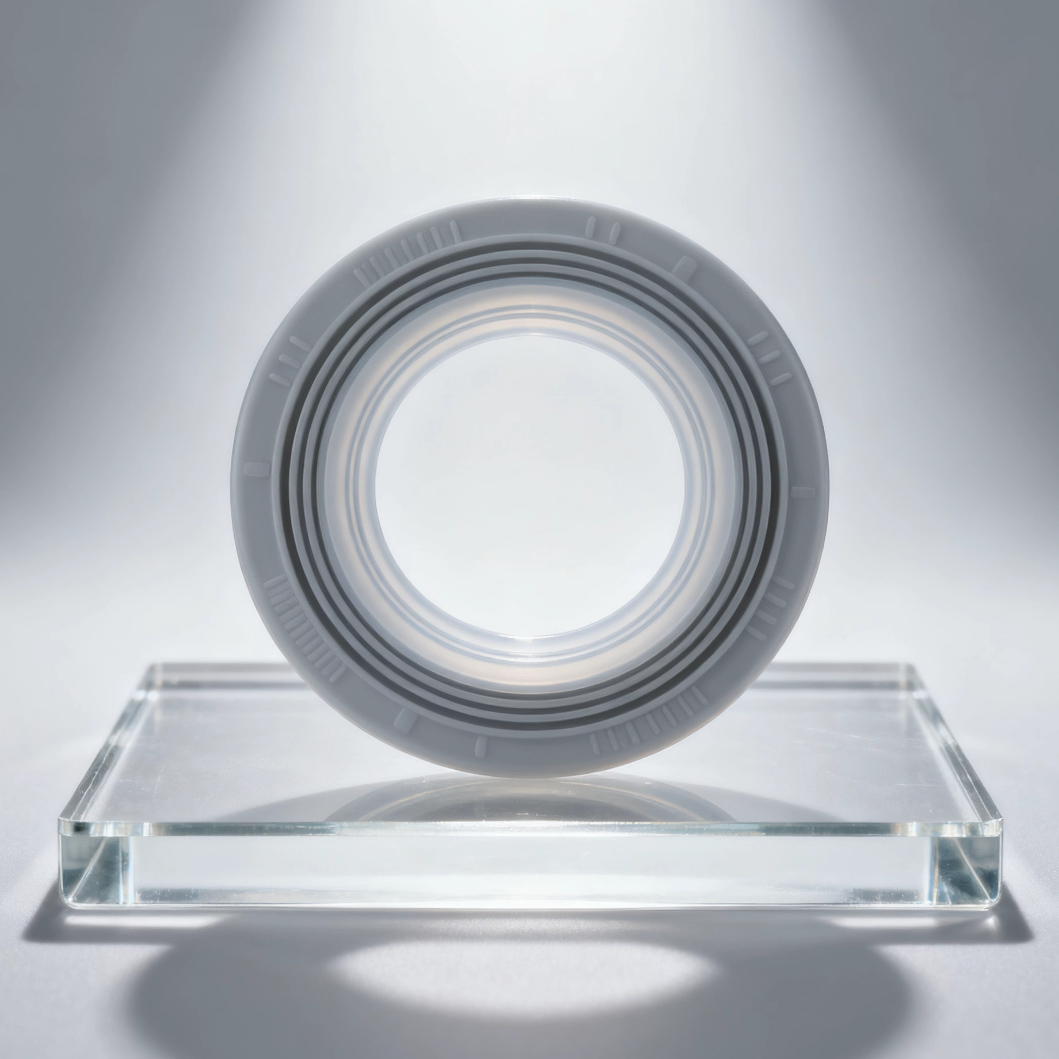
Even the most precisely engineered mechanical systems contain microscopic imperfections. Understanding how these imperfections interact with the elastomer is the key to preventing sudden leaks.
In materials engineering, the notch effect describes how a geometric discontinuity acts as a localized stress concentrator. This could be a sharp corner on a machined part, a tiny micro-tear, or a burr left on a metal flange. When tension is applied to the silicone, the physical stress does not distribute evenly across the material volume. Instead, it multiplies exponentially at the very apex of the Notch.
Standard silicone polymers inherently possess relatively low intermolecular friction. Once a notch concentrates enough stress to sever the first few polymer chains, the surrounding chains rapidly follow suit in a domino effect. Without specialized reinforcing fillers, a low-strength seal will split almost instantly when introduced to a sharp edge under tension.
Engineers can proactively mitigate this sensitivity through careful hardware design. Eliminate sharp internal corners on mating surfaces. Substituting them with a generous radius distributes stress much more evenly across the elastomer. Improving surface finishes by avoiding rough machining marks in the groove is critical. These rough marks act like microscopic blades. Finally, optimizing groove design ensures the gland provides adequate volume, allowing the silicone to deform naturally without being pinched.
A persistent misconception in fluid control engineering is the belief that harder materials are inherently tougher. In reality, the relationship between hardness and tear resistance is highly complex and requires deliberate balancing.
Shore A Durometer is the standardized scale used to measure the hardness of flexible elastomers. A lower number indicates a very soft material that effortlessly conforms to irregular surfaces. A higher number indicates a much harder, denser material. This metric directly determines how much compressive force is required to create a tight seal.
There is a distinct correlation between hardness and tear strength, yet it is far from strictly linear. Very soft silicones typically exhibit lower tear strength because they lack dense polymer cross-linking and reinforcing fillers. On the other end of the spectrum, extremely hard silicones become excessively stiff and brittle. They lose the vital elasticity required to stretch and resist ripping under dynamic strain.
Specifically, the highest tear strengths are generally achieved in the mid-durometer range, typically between 40 and 60 Shore A. Simply increasing the hardness of a standard commercial silicone will not magically yield high tear resistance. Achieving superior toughness requires specialized formulations that utilize high-surface-area fumed silica fillers. You must specify a material that remains soft enough to fill microscopic gaps in the flange while utilizing the correct chemistry to remain incredibly tough.
Determining the exact specification requires analyzing the physical demands of the end-use environment. To navigate these demands and prevent costly failures, materials generally fall into distinct categories based on their mechanical resilience. Let us look at a practical selection matrix.
Application Environment | Recommended Tear Strength | Typical Durometer | Example Use Case |
|---|---|---|---|
Static, Smooth Flanges | 10 - 20 kN/m | 30 - 50 Shore A | Dust seals, basic enclosure gaskets |
Moderate Dynamic, Manual Assembly | 20 - 35 kN/m | 40 - 60 Shore A | Automotive housings, outdoor lighting |
High Vibration, Medical, Miniaturized | 35 - 50+ kN/m | 40 - 70 Shore A | Ventilator seals, EV battery enclosures |
Standard commercial-grade silicone typically offers baseline strength best utilized for static seals and simple flat flange designs. It is the cost-effective choice for install-and-forget applications where the Gasket is gently placed into a clean groove and never disturbed.
In contrast, specialty high-tear formulations achieve robust values exceeding 35 kN/m. These premium grades are engineered for complex 3D geometries, push-in friction seals, and parts with severe undercuts. For instance, a medical ventilator gasket must ensure absolute pressure stability and reduce air leakage under continuous cycling. Standard silicone would quickly degrade in this high-stress respiratory equipment. High-tear silicone guarantees the seal remains intact despite constant pressure changes and frequent sterilization cycles. They are absolutely mandatory for dynamic environments subjected to heavy vibration.
Beyond baseline mechanical strength, external environmental variables heavily influence how an elastomer performs in the field. A holistic approach to specification is required to ensure longevity.
Silicone functions reliably across extreme temperature ranges. However, at peak operating temperatures, the polymer matrix softens. The tear strength of any elastomer will naturally decrease compared to its room-temperature baseline. Prolonged exposure to harsh chemicals, high ozone concentrations, or intense UV radiation will slowly degrade the polymer matrix over time. Engineers must meticulously account for this environmental degradation when calculating safety margins.
Furthermore, the hardware interacting directly with the seal dictates the required toughness. A seal compressed against a rough, sand-cast aluminum engine block faces thousands of microscopic abrasive points. Rough mating surfaces and inconsistent flange gaps necessitate significantly tougher elastomers to prevent the material from being chewed apart over its operational lifespan.
Choosing the right tear strength is a delicate engineering balancing act. It requires a thorough evaluation of hardness, hardware flange design, and factory assembly methods. While standard materials certainly suffice for basic environments, complex mechanical systems and miniaturized designs demand superior toughness.
A single sharp edge. A minor notch. A moment of careless assembly. Any of these can completely ruin a seal's integrity if the material is not up to the task. Prioritizing mechanical resilience during the initial design phase eliminates premature failures and drastically reduces manufacturing scrap.
If you are experiencing recurring seal failures or designing a new product with complex sealing requirements, you do not have to guess. Upgrading your material specification protects both your project and your bottom line. Visit Zhongweixin to explore our advanced silicone gasket solutions, review detailed product parameters, and consult with our engineering team to identify the perfect high-tear formulation for your specific hardware.
Standard general-purpose silicone typically ranges from 10 to 20 kN/m. This baseline strength is perfectly adequate for basic, static sealing applications where the elastomer is compressed between smooth surfaces without sharp edges or dynamic movement.
Yes. While high tear strength is excellent for physical durability, the specific chemical formulations required to achieve maximum toughness might compromise other critical properties. Extremely high-tear materials may exhibit a poorer compression set, meaning they lose their ability to bounce back to their original shape after being compressed. Over time, this loss of rebound can lead to gradual pressure leaks in static joints.
Not necessarily. Very soft silicones tear quite easily due to a lack of structural density, but very hard silicones can become stiff, brittle, and highly sensitive to notch propagation. The highest tear strengths are usually achieved in the mid-durometer ranges by utilizing specialized high-tear base polymers and fumed silica fillers rather than just indiscriminately increasing overall hardness.
To prevent installation failures, you should implement three structural changes. First, eliminate any sharp edges, burrs, or notches on the mating hardware to remove stress concentrators. Second, utilize an appropriate gasket lubricant to reduce friction during seating. Finally, specify a high tear strength silicone grade specifically formulated to resist the aggressive stretching inherent to your assembly process.
While silicone is highly resistant to extreme temperatures, its physical properties are not entirely immune to thermal shifts. As temperatures approach the upper limits of the material's rating, the polymer matrix softens, resulting in a temporary reduction in tear resistance. Engineers must factor in this high-temperature softening when designing dynamic seals for hot environments.
Tensile strength measures the total force required to pull a completely flawless, undamaged piece of material apart until it breaks. Tear strength, on the other hand, measures the force required to spread or propagate a cut or flaw that already exists in the material. For real-world sealing applications, tear strength is often the more critical metric because micro-damage frequently occurs during installation or operation.


