
Author: Site Editor Publish Time: 2026-06-29 Origin: Site
Material selection in industrial engineering carries massive stakes. Choosing the wrong elastomer leads directly to premature equipment failure, catastrophic compliance breaches, and heavily disruptive downtime. Engineers specify a Silicone Sheet over traditional rubbers for specific, critical reasons. It offers exceptional thermal stability alongside unparalleled resistance to ultraviolet light and ozone degradation. Other materials simply degrade rapidly under these harsh environmental conditions. However, picking the precise grade requires methodical analysis. You cannot rely on mere guesswork. We created this practical evaluation matrix to help engineers and procurement teams make informed, accurate decisions. It aligns raw material specifications directly against actual operational realities. By following this analytical framework, you ensure the chosen elastomer performs safely and reliably over its entire intended lifespan. Securing the perfect seal demands rigorous attention to both chemical and mechanical details.
Silicone excels in extreme temperatures (-60°C to 230°C+) but is not universally chemical-resistant (avoid heavy oils and solvents).
Choosing between solid, sponge, and specialty (e.g., vacuum-grade) formats depends entirely on your required compression profile and application.
Industrial vs. Food-Grade compliance dictates material cost and traceability; over-specifying wastes budget, under-specifying introduces regulatory risk.
Evaluating Durometer (hardness) and compression set is more critical to long-term sealing success than baseline tensile strength.
The most critical step involves mapping out environmental variables accurately. Where will the seal actually reside? We must examine temperature fluctuations first. An industrial silicone sheet thrives in extreme climates. It easily maintains structural flexibility at -60°C without shattering or cracking under stress. Compare this performance against EPDM or Neoprene. Those standard rubbers stiffen, become brittle, and fail rapidly in sub-zero environments. On the high end, continuous operating temperatures reaching 230°C remain perfectly safe. Intermittent thermal spikes push this upper limit even higher. The inherent siloxane backbone prevents thermal degradation.
Next, consider media and chemical exposure thoroughly. We must apply a highly skeptical lens here. The material boasts excellent resistance against UV rays, atmospheric ozone, and general weathering. However, it is not invincible. You must avoid prolonged contact against heavy petrochemicals, strong concentrated acids, or high-pressure steam environments. Standard variants absorb oils, swell dramatically, and lose mechanical integrity. If your application involves harsh automotive fuels or aerospace lubricants, specify fluorosilicone instead. Fluorosilicone bridges the performance gap beautifully.
Finally, map out the surrounding mechanical stress. Static sealing works quite differently compared to dynamic environments. Gaskets locked firmly between massive metal flanges face different compressive forces than continuous vibration-dampening pads. In dynamic applications involving constant friction, lower abrasion resistance becomes a known vulnerability. Clarifying these specific environmental pressures defines your baseline material constraints immediately.
Matching physical features to specific operational outcomes saves engineering time. Material formatting dictates physical performance entirely. You must categorize your needs correctly.
Solid variants offer exceptionally high density. They serve perfectly for heavy-duty gaskets, high-pressure liquid environments, and severe electrical insulation needs. High closure forces easily compress solid materials into rigid sealing grooves. They provide maximum tensile strength.
Closed-cell sponge materials offer massive compressibility instead. They require very low closure force to create an effective environmental barrier. We recommend sponge formats for dust seals, delicate electronic enclosures, and highly uneven mating surfaces. The internal cellular structure conforms beautifully to complex, irregular gaps. Closed-cell designs prevent moisture ingress entirely.
Vacuum-grade options provide unique, specialized benefits. They offer extremely high tear resistance alongside supreme dimensional stability. Engineers use these extensively inside large solar panel laminators and heavy glass lamination processes. These cycles involve intense vacuum pressure cycles.
Fiberglass-reinforced options solve completely different mechanical challenges. Internal reinforcement becomes absolutely necessary when preventing stretch or elongation under heavy load. The embedded fiberglass mesh locks the physical dimensions tightly in place. This prevents the gasket from creeping outward when compressed.
Material Format | Primary Characteristics | Ideal Industrial Applications | Relative Compressibility |
|---|---|---|---|
Solid Grade | High density, high dielectric strength | Flange gaskets, electrical insulators | Low (requires high closure force) |
Closed-Cell Sponge | Air-filled cells, highly conformable | Enclosure seals, dust barriers | High (requires low closure force) |
Vacuum-Grade | Extreme tear resistance, zero outgassing | Solar panel laminators, glass manufacturing | Moderate |
Fiberglass-Reinforced | Zero stretch, dimensionally locked | High-pressure joints, dynamic load points | Very Low |
Selecting the correct format prevents immediate installation failures. Always review the expected mating surfaces carefully. Uneven metal castings require sponge conformity. Precision-machined grooves demand solid profiles.
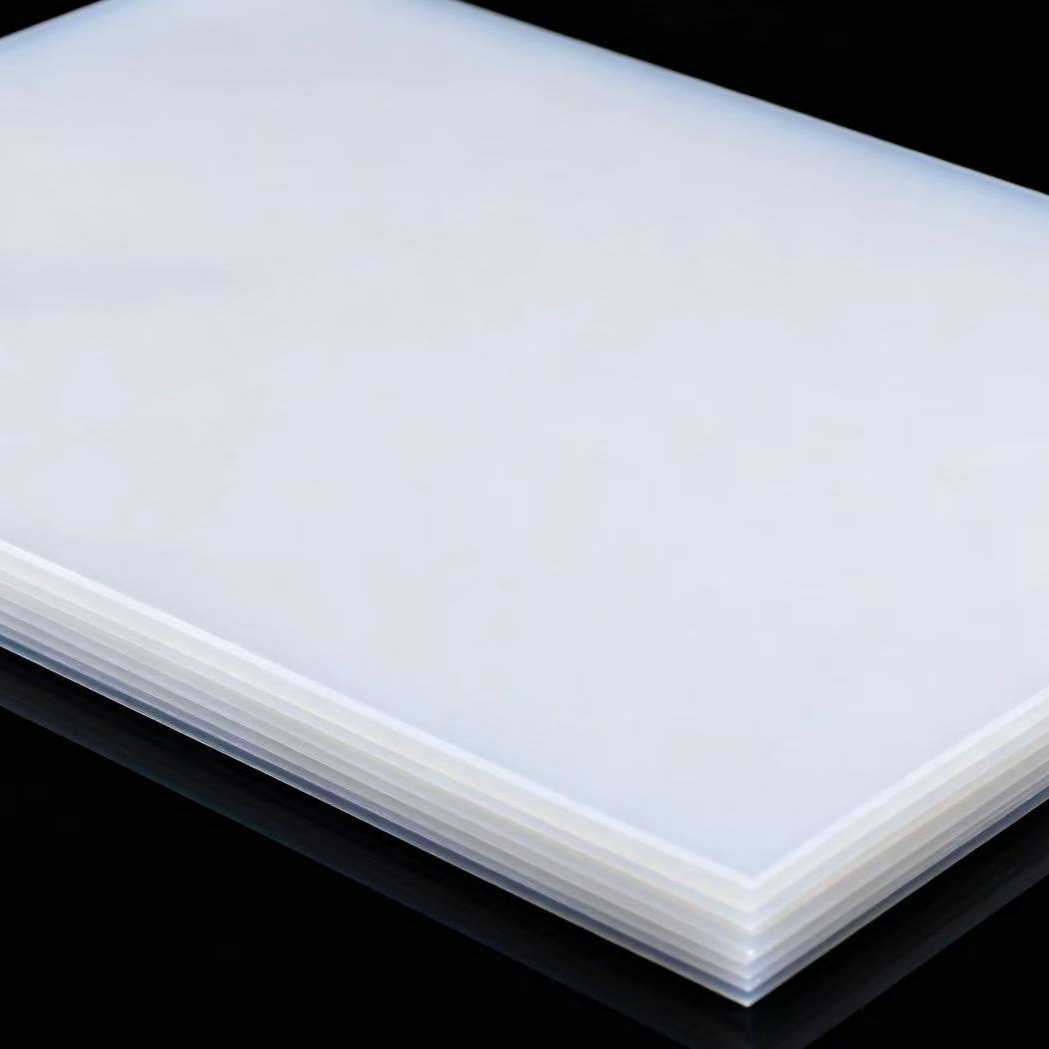
Evaluating raw metrics separates durable seals from failing ones. Relying purely on visual inspection guarantees future leaks. You must analyze specific laboratory metrics.
Durometer measures surface hardness explicitly. The standard industrial range falls mostly between 30 and 80 Shore A. We follow a simple, proven decision rule. Use 60 Shore A as the universal baseline standard for general mechanical gasketing. Choose lower numbers, like 30 or 40 Shore A, for high conformability needs. Select higher numbers, reaching 70 or 80 Shore A, for aggressive impact resistance and high-pressure confinement. Matching the durometer correctly ensures the seal fills microscopic surface flaws.
Next, examine compression set resistance carefully. This laboratory metric matters intensely for long-term maintenance cycles. A low compression set means the elastomer bounces back vigorously after sustaining long-term mechanical pressure. It effectively prevents gasket leaks over years of continuous operation. High compression set materials flatten out permanently. Once the material takes a permanent set, any thermal expansion in the metal flanges creates immediate leak paths.
Best Practice: Always verify compression set percentages using standard ASTM D395 testing protocols.
Common Mistake: Prioritizing high tensile strength over a low compression set for static sealing applications.
We also evaluate thickness alongside manufacturing tolerances. Specifying exact panel thickness directly impacts the resulting compression ratio. Choosing between 1/16-inch and 1/4-inch variations drastically shifts the required bolting torque. It also changes how flanges bolt together safely. Understand the standard tolerance drift. Thick sheets exhibit wider manufacturing variances. A slight deviation in thick materials drastically alters the applied sealing pressure.
Regulatory compliance dictates supply chain traceability. It also heavily influences raw material production methods. We must distinguish between various compliance grades to optimize procurement budgets safely. Over-specifying drains project funds unnecessarily. Under-specifying introduces severe, unacceptable regulatory risk.
Commercial or general industrial grade works perfectly for basic mechanical sealing. Heavy automotive sealing, HVAC joints, and structural weather gaps fall neatly into this category. You use this baseline tier when chemical outgassing or absolute biological purity remains entirely unregulated. It provides robust performance affordably.
Contrast this directly against FDA, LFGB, or Medical grade variants. High-purity processing becomes legally required here. Modern food processing lines, beverage dispensers, and pharmaceutical cleanrooms demand certified purity. Remember one vital, often misunderstood fact. "Food grade" status does not alter fundamental mechanical properties. It simply guarantees non-toxic chemical curing processes. Platinum curing provides cleaner, outgassing-free results. It leaves absolutely no chemical residue. Peroxide curing provides cost-efficiency but occasionally leaves trace acidic byproducts behind. Platinum stands as the premium choice for sensitive environments.
Finally, flame retardant grades meet strict, uncompromising fire safety profiles. Look specifically for independent UL 94 V-0 certifications. Aerospace cabins, mass transit railcars, and enclosed electronic control panels rely heavily on these self-extinguishing properties. The material stops burning immediately once you remove the external flame source. This prevents catastrophic fire spread.
Buying the raw rolled material only solves half the engineering equation. Actual physical implementation introduces distinct, frustrating challenges. Field technicians often face assembly hurdles unseen on paper.
We see numerous adhesive backing failures repeatedly in the field. Standard commercial adhesives simply do not bond well to low-surface-energy elastomers. The backing peels off prematurely. You must specify exact Pressure Sensitive Adhesive (PSA) backings. Chemical manufacturers formulate these acrylic or silicone-based adhesives specifically for slippery, non-stick surfaces. Always factor in your ambient installation temperature during assembly. Applying PSA backings in freezing warehouses destroys the initial adhesive tack entirely.
Die-cutting also presents unique fabrication nuances. Cutting solid dense panels feels relatively easy using standard steel rule dies. However, closed-cell sponge variants require highly specific, precision cutting tools. Improper dull dies cause severe edge-crushing. This physically compromises the final seal before installation ever begins. Waterjet cutting often provides superior, clean edges for complex geometries.
Finally, apply strict, objective logic when shortlisting potential suppliers. Vetting vendors rigorously prevents disastrous material quality fade over time.
Ask for comprehensive, recent batch testing laboratory reports.
Verify standard ASTM D2000 material callouts explicitly on the spec sheet.
Request physical sample squares for actual prototype compression testing.
Confirm dimensional thickness tolerances deeply before placing large volume orders.
Ignoring these vendor vetting steps often results in receiving improperly cured rolls. Improperly cured rubber emits strong odors and fails prematurely under pressure.
Securing the perfect, long-lasting seal demands rigorous technical evaluation. Balancing environmental demands against precise mechanical properties remains your primary engineering goal. Review the extreme temperature limits carefully. Acknowledge the exact chemical media expected in the operating environment. Align your durometer choices directly to your actual available flange bolting pressure. Never ignore the importance of compression set resistance for long-term reliability.
Encourage your entire engineering team to finalize their operating parameters thoroughly. Lock down the expected temperature spikes, operating fluid pressures, and chemical exposures firmly. Do this before ever requesting custom fabrication quotes. Finalizing these specific details prevents ordering the wrong raw sheet rolls. It protects project timelines and ensures safe, compliant machinery operation.
A: Lifespan depends entirely on environmental variables and mechanical stress. In static, moderate-temperature applications, these materials easily last 10 to 15 years. Continuous extreme heat or harsh chemical exposure reduces this timeframe significantly. Monitoring compression set degradation over time dictates exact replacement schedules.
A: Yes. The material provides inherent, extraordinary resistance to ultraviolet light, atmospheric ozone, and general severe weathering. It does not crack, chalk, or degrade under direct sunlight like natural rubber does. It handles long-term outdoor exposure exceptionally well.
A: Follow a quick rule-of-thumb referencing flange pressure and surface unevenness. Use 30 to 40 Shore A for lightweight plastic enclosures or highly uneven surfaces. Use 60 Shore A for standard, flat industrial metal flanges. Choose 70 to 80 Shore A for high-pressure systems requiring minimal compression.
A: Peroxide curing represents the standard, cost-effective industrial manufacturing method. It occasionally leaves trace byproducts and slight odors. Platinum curing costs more but yields exceptionally pure, outgassing-free material. Medical and strict food-grade applications require platinum curing to ensure absolute non-toxicity and supreme optical clarity.


