


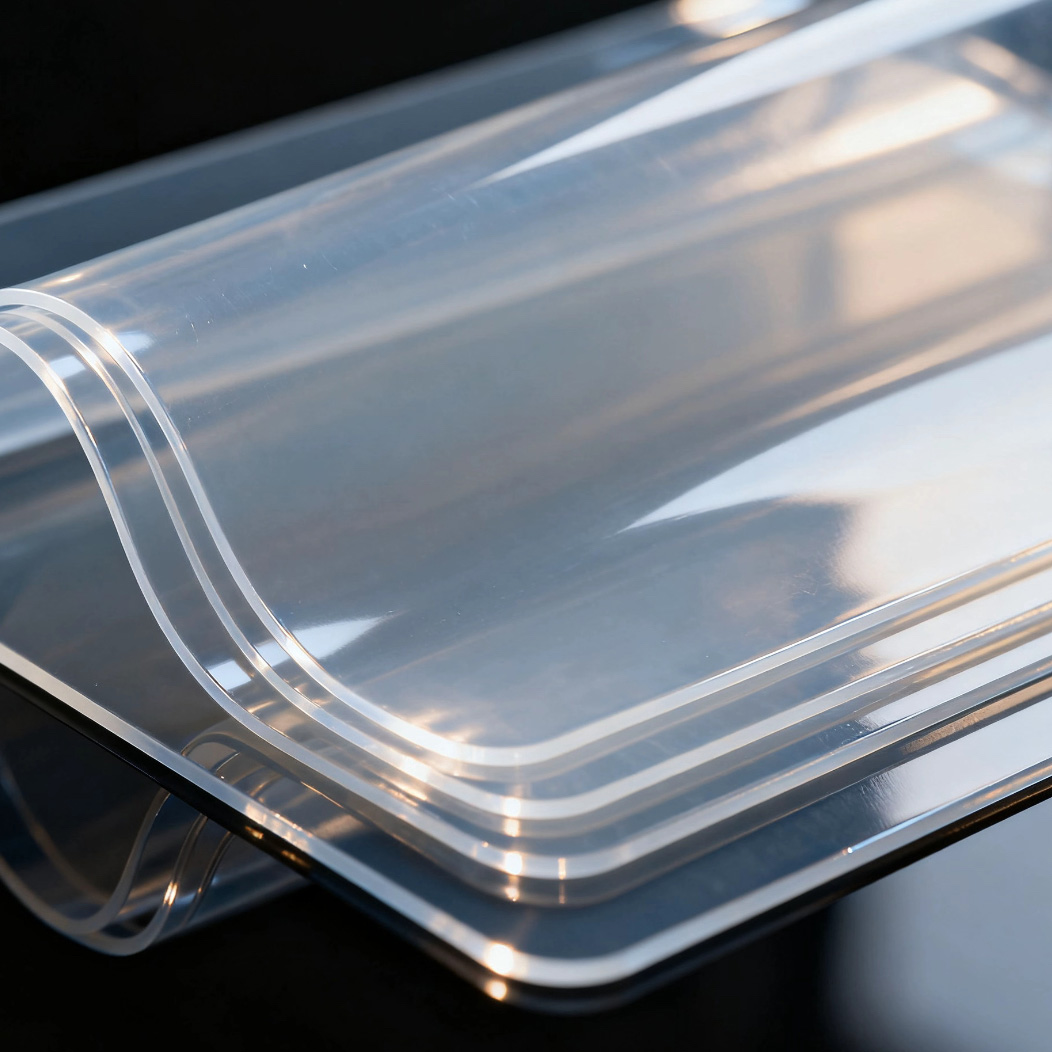


Advantages and characteristics of silicone electronic component window chip products
I. Core advantages: the performance value of function-oriented
1. Efficient protection, adapting to the electronic environment
It has excellent sealed dustproof and waterproof performance (up to IP65/IP67 level), which can effectively isolate dust, water vapour and oil from entering the interior of electronic components (such as instrument displays, sensor windows); at the same time, the insulation of silicone (volume resistivity ≥10¹4Ω·cm) can prevent the window sheet from becoming Conductive media to ensure the electrical safety of electronic components.
2. Strong weather resistance, adaptable to complex working conditions
It has a wide range of high and low temperature resistance (-40℃~150℃, special customisation up to 200℃), no brittleness and deformation in high and low temperature circulation, humid and hot environment; outstanding anti-ageing performance, long-term exposure to ultraviolet and ozone environment, slow light transmission decay, and the service life is 2-3 times that of ordinary plastic window sheets.
3. High light transmission + anti-yellowing, ensuring the clarity of observation
The light transmittance of high-quality silicone window sheets is ≥90%, which is close to glass transparency, and does not affect the information reading of electronic components (such as displays and indicator lights); after adding antioxidants and UV stabilisers, it can achieve "3-year anti-yellowing" and avoid window turbidity and blurred observation due to ageing.
4. Flexible buffering, protecting the body of the component
The silicone material has good elasticity (Shoe hardness 40-50A). When the equipment is slightly impacted or collided, the window chip can absorb the impact force through deformation to avoid direct damage to the electronic components below (such as precision sensors and liquid crystal modules).
II. Product features: differentiated application adaptability
1. High degree of customisation, suitable for special-shaped windows
Silicone is easy to process and mould. It can be customised according to the shape of the electronic component window (round, square, curved, with notch/convex structure), size (minimum thickness can be up to 0.1mm), and even can be integrated into a structure with sealed lips and installed snaps, which can be closely assembled without additional accessories.
2. Flexible fitting, compatible with multi-material base
The flexibility of silicone makes it closely fit the shell of electronic equipment of different materials such as glass, plastic, metal, etc., and there is no gap leakage; it can be customised with back glue (high-temperature pressure-sensitive glue is selected), directly pasted and fixed, which is convenient to install and does not damage the surface of the equipment.
3. Resistant to chemical corrosion, adapt to special scenarios
It has good tolerance to detergents (such as isopropyl alcohol), coolants, weak acids and alkalis and other media commonly used in the electronics industry. It is insoluble and does not swell and does not degrade. It can be used for electronic components with chemical contact needs such as industrial equipment and medical instruments.
4. Lightweight + impact-resistant, superior to traditional materials
The weight is only 1/3 of that of glass windows of the same size, which is suitable for portable electronic devices (such as handheld detectors and intelligent terminals); the impact resistance is much better than that of glass (not easy to break) and ordinary acrylic (poor drop resistance), reducing the risk of damage during transportation and use.
5. Surface is easy to functionalise and expand usage scenarios
Additional functions can be realised through surface treatment, such as: 1 anti-fingerprint coating (reduces oil adhesion and is easy to clean); 2 anti-glare treatment (avoid reflection under strong light and improve outdoor observation experience); 3 antibacterial coating (applicable to the windows of medical electronic devices).
FAQ:
Frequently Asked Questions and Answers about Silicone Electronic Components Windows
I. Transparency and display issues
1. Problem: After the use of the window chip, it gradually becomes cloudy and foggy, resulting in the blurred display of electronic components.
Answer: Mostly due to the lack of ageing resistance of silicone material, molecular degradation occurs due to temperature changes, oil erosion or ultraviolet irradiation. It is necessary to replace the anti-yellowing transparent silicone window sheet (add UV stabiliser and antioxidant); avoid the contact of the window sheet with alcohol, gasoline and other solvents on a daily basis, and regularly wipe the surface oil with a soft cloth.
2. Problem: The transparency of the new window sheet is uneven, and there are local bubbles, impurities or scratches, which affects the display effect.
Answer: It belongs to the production process defect (poor exhaust during injection moulding, impurities in raw materials or improper operation during cutting). High-quality window sheets should be free of bubbles and scratches, and the light transmittance should be ≥92%. It is recommended to replace regular manufacturers' products. When buying, observe the light source to ensure that the surface is uniform and transparent and there are no visible defects.
3. Problem: The window chip is too thick or the refractive index deviation leads to deformation and distortion of the display content of electronic components.
Answer: It is necessary to customise the appropriate thickness (regular 0.5-2mm) according to the display needs, and select a pure silicone substrate with high light transmittance (refractive index 1.4-1.5, close to glass); when customising, clarify the resolution and observation angle requirements of the display components to the manufacturer to ensure the matching of the optical performance of the window chip.
II. Sealing and protective issues
1. Problem: After the window chip is installed, the inside of the electronic components still has dust and water, and the protection is invalid.
Answer: The core reasons include: 1 The size of the window chip does not match the mounting groove (gap > 0.1mm); 2 It is not compacted during installation and there are bubbles; 3 The edge of the window chip is ageing and cracked. Solution: Replace the window sheet of the appropriate size, clean the installation groove with isopropyl alcohol before installation, apply a small amount of electronic-grade silicone adhesive and compact it to ensure gap-free sealing.
2. Question: In a humid or dusty environment, mould grows at the junction of the window sheet and the electronic component housing.
Answer: You need to choose an antibacterial silicone window sheet (add silver ion antibacterial agent) and strengthen the ventilation of the equipment at the same time; if mould has been bred, wipe the window sheet with a soft cloth dipped in diluted medical alcohol (75%). After drying, reapply the sealant and install it to prevent mould from invading the inside of the component.
III. ALLEGOING AND INSTALLATION PROBLEMS
1. Problem: It is difficult to find suitable window pieces for windows of shaped electronic components (such as round and irregular polygons).
Answer: Choose a customised silicone window sheet, and provide 3D models or physical surveying data of the electronic component installation groove. Manufacturers can make special dimensions through laser cutting and moulding; for slightly curved windows, you can choose to use highly flexible silicone sheets to ensure no wrinkles through slight stretching and fitting.
2. Problem: The window sheet is difficult to install and cannot be embedded in the mounting groove, or it is easy to fall off after embedding.
Answer: If the size matches, a small amount of electronic grease (does not affect transparency) can be applied to the edge of the window sheet for auxiliary installation; for the problem of falling off, you need to choose a window sheet with a backing glue (the backing glue should be pressure-sensitive glue with temperature-resistant ≥120℃), or reserve the buckle structure in the installation groove to enhance the fixity.
3. Problem: Improper force during installation, causing the window plate to break or deform, and cannot be used.
Answer: Although the silicone window sheet is tough, it will still be damaged by excessive squeezing. When installing, it should be gently pushed and embedded with the groove to avoid using tools. For thinner (<0.8mm) window sheets, they can be fitted on the hard support sheet before installing to reduce the risk of deformation.
IV. Problems of durability and wear
1. Problem: The surface of the window chip is easily scratched, especially electronic components that are frequently touched or exposed.
Answer: It is necessary to replace the hard-coated silicone window sheet on the surface (coated hardness ≥3H), or choose fluorosilicone material (wear resistance is better than ordinary silicone); avoid touching the window sheet with sharp objects in daily life, and it can be used with a transparent protective film.
2. Problem: In a high and low temperature cycle environment (such as -30℃~85℃), the window sheet is cracked, brittled or softened and deformed.
Answer: The temperature-resistant range of ordinary silicone is insufficient, and it is necessary to customise the high and low-temperature silicone window sheet (methyl vinyl silicone rubber is selected, temperature-resistant -60℃~200℃); when customising, the manufacturer is required to provide a high and low-temperature cycle test report (such as 1000 cycles without abnormality) to ensure adaptation to extreme working conditions.
V. Quality and performance issues
1. Problem: The insulation performance of the window chip does not meet the standard, resulting in the risk of leakage and short circuit of electronic components.
Answer: It is necessary to choose a high-purity silicone substrate (impurity content ≤0.05%) and an insulation breakdown voltage ≥25kV/mm; at the time of purchase, the manufacturer is required to provide an insulation performance test report to avoid using poor-quality window sheets made of recycled materials.
2. Question: How to quickly identify the quality of the silicone electronic component window chip?
Answer: 3 steps simple identification: 1 Smell: high-quality silicone has no pungent odour, and inferior products have a rubber smell or sour taste; 2 Test toughness: bend 180° by hand and then loosen, no cracks, quick rebound, poor-quality products are easy to break; 3 light measurement: cover the window sheet on the mobile phone screen, and the display content is clear and not blurred, It shows that the light transmission is qualified.

